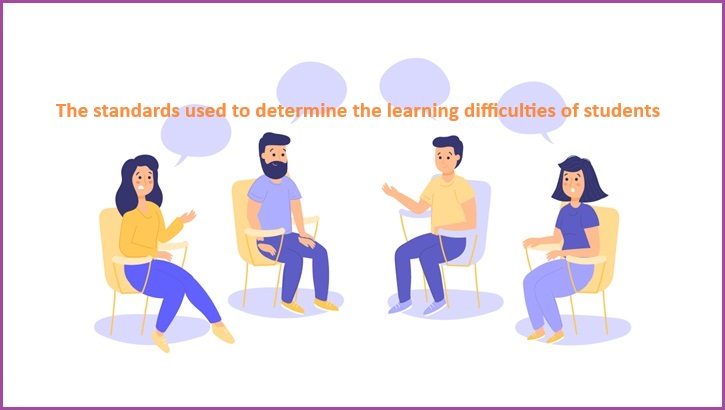
Every student is unique regarding their identity, requirements, and learning preferences. Students have a variety of learning difficulties throughout education. The Interstate New Teachers Assessment and Support Consortium (INTASC) (2010), pp. 1-4, has provided guidelines for educators to recognize students’ learning difficulties.
Standard # l:
Teachers can design learning experiences that help students relate to these aspects of the subject matter because they are knowledgeable about the key ideas, inquiry tools, and structures of the discipline(s) they teach.
The teacher must comprehend the key ideas, presumptions, arguments, investigative techniques, and modes of knowing that are fundamental to the subject or disciplines that they teach to meet this requirement. Educators need to comprehend how students’ conceptual frameworks and misunderstandings regarding a particular subject matter might impact their academic progress. The instructor connects different topic areas and their discipline in this way.
The instructor understands that subject area knowledge is dynamic and complex, rather than being a static collection of facts. He or she tries to stay up to date on the latest concepts and theories in the industry. The instructor values many viewpoints and explains to students how knowledge is formed from the student’s point of view. The instructor is passionate about the subject(s) they teach and finds applications to real-world situations. The instructor is dedicated to lifelong learning and participates in professional discussions on subject matter expertise and the discipline that the students are studying.
The teacher can perform the following tasks:
• The instructor skillfully employs a variety of illustrations and justifications of discipline-specific notions to encapsulate important concepts and make connections to students’ existing knowledge.
• When instructing students on subject area topics, the teacher can depict and include a variety of theories, “ways of knowing,” and inquiry techniques.
• The thoroughness, correctness, and value of teaching resources and curricular materials in terms of conveying specific ideas and concepts may be assessed by the instructor.
• The instructor involves the students in creating knowledge and testing theories by the standards of evidence and inquiry techniques applied in the field.
• The instructor creates and implements curricula that inspire students to consider, challenge, and analyze concepts from a variety of angles.
• The instructor can design interdisciplinary learning activities that motivate students to combine information, abilities, and research strategies from several topic areas.
Read: Describe the components of presentation skills in detail
Standard #2:
The instructor can offer learning opportunities that enhance the intellectual, social, and personal growth of the students because they have a thorough understanding of how children learn and develop. To meet this requirement, the teacher must comprehend the processes by which children build their knowledge, skills, and mental habits. They must also be adept at implementing instructional techniques that support learning for a broad spectrum of student abilities. Along with knowing how to take these aspects into account while planning lessons, teachers should also be aware of how students’ physical, social, emotional, moral, and cognitive growth affects learning. It is also important for teachers to understand the expected developmental progressions and individual variation within each domain (physical, social, emotional, moral, and cognitive). They should also be able to recognize different learning readiness levels and comprehend how performance in one domain can impact other domains. The instructor must be dedicated to assisting the students in gaining competence and self-assurance, as well as recognize individual variance within each area of growth and respect each learner’s varied skills. Instructors should be inclined to exploit their students’ weaknesses as a springboard for improvement and their mistakes as teaching moments.
The teacher can perform the following tasks:
• The instructor evaluates both individual and group performance to plan lessons that take students to the next level of growth while also meeting their present requirements in each of the five domains (cognitive, social, emotional, moral, and physical).
• By creating connections to students’ experiences, provoking reflection on past knowledge, and allowing opportunities for active engagement, manipulation, and testing of concepts and materials, the teacher encourages students to take ownership of their learning assignments.
• The instructor gathers examples of students’ thinking both verbally and in writing, listens to and responds to group discussions, and generally uses the students’ experiences and ways of thinking as a starting point for instructional activities.
Standard #3:
The teacher recognizes that every student has a unique learning style, and they design learning activities that cater to these differences. To meet this need, the instructor must be able to recognize and comprehend variations in learning and performance philosophies, such as multiple intelligences, learning styles, and performance modes. They should also be able to create lessons that build on students’ existing strengths to support their future development. Educators must comprehend and offer accommodations for learning disabilities, visual and perceptual impairments, and unique physical or mental obstacles. The process of acquiring a second language and teaching techniques for pupils whose first language is not English should be familiar to the instructor. The teacher must understand how language, culture, family, and community values, in addition to individual experiences, abilities, and past learning, affect students’ learning. Regarding this, the instructor has to have a solid foundation for comprehending diversity in society and culture.
The teacher can perform the following tasks:
•The instructor has the belief that every student can study at an advanced level and keeps working to ensure that every student succeeds.
• The educator respects students as unique individuals with varying personal and family backgrounds, skills, talents, and interests. The educator is cognizant of community and cultural norms. The educator values and appreciates human diversity.
• The educator respects students’ varied talents and perspectives. The educator is dedicated to the pursuit of “individually configured excellence.”
• The instructor helps students learn to esteem one another and makes them feel important for their potential as individuals.
• The instructor determines and creates lessons that are suited to each student’s developmental stage, learning preferences, requirements, and strengths.
• The instructor employs instructional strategies that take into account the various learning and performance types of the students as well as their varied experiences.
• The instructor provides for each student who has specific learning requirements or differences by allocating adequate time and resources (in terms of tasks assigned, communication and response modalities, and work environment).
• To accommodate students with special learning requirements, the teacher can determine when and how to access the right assistance or resources.
• When and how to use the right resources to suit the requirements of kids with certain skills may be determined by the instructor.
• The instructor makes an effort to learn about the families, communities, and cultures of the students. Based on this understanding, the instructor connects the curriculum to the experiences of the students (e.g., drawing explicit connections between subject matter and community matters, and making assignments that can relate to students’ experiences and cultures).
• The instructor incorporates a variety of viewpoints into the topic discussion, paying particular attention to the cultural norms and personal, familial, and communal experiences of the students.
• The instructor fosters an environment of respect for individual variations within the learning group.
Read our blog: PakSci Mission