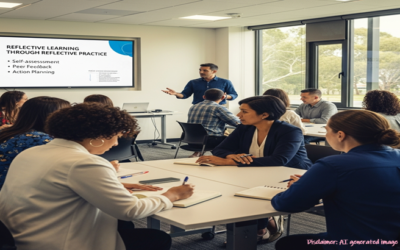

There are several advantages to giving group discussions in the classroom, including student involvement in the learning process, bringing course material to life, information retention, and skill development. Challenges that are directly tied to the course objectives, material, and students’ interests and experiences are the ones that make groups work best. Group activities are a good way to break up the monotony of your lessons. Which kind of group, nevertheless, ought to be employed? Various factors such as the number of students in your class, the amount of time you have, the classroom’s layout, and the type of group project will determine the outcome. You might try any of these choices.
Small Groups
Small groups facilitate more active participation because they often consist of less than 20 individuals. These get-togethers, which might take the form of smaller get-togethers or breakout sessions from larger ones, provide a wealth of chances for energetic, purposeful engagement and the innovative, adaptable exchange of ideas. When conducting class discussions, small groups are typically favored. Timing and the subject’s intricacy or sensitivity will determine size. Every group usually appoints a reporter to provide an overview of the conversation. Several ideas for small group discussion have been provided by Haugen (1998):
1. Create a secure environment. If students fear they will be made fun of for their comments, they won’t participate in the conversation.
2. When there are specific learning objectives, small group discussions are beneficial. The teacher needs to properly express the goals of the conversations and have clear objectives. Putting the goals in “action” words is beneficial for both teachers and students. Effective learning objectives are those that address the knowledge, comprehension, application, and efficiency that students should possess. The ability to recognize similarities and differences between present events and historical events, for example, would be a more realistic goal than just memorizing a list of facts or dates.
3. The teacher needs to establish and convey the standards that are expected of the pupils. Will their involvement be factored towards their grade? Therefore, it is important to set clear expectations for the student’s performance as well as how they will be evaluated. Additionally, students must comprehend what they must know, how well they must know it, and how they must demonstrate what they know.
4. Steer clear of binary inquiries. When students respond with brevity, urge them to elaborate. urge “why” or “how” inquiries that spark conversation. Additionally, stay away from inquiries with a single response.
5. Don’t be afraid of silence. Though it could be the hardest task, doing this is necessary. The instructor may feel that a pause of one or two beats is an eternity when leading a small group discussion. However, even if the instructor has presented a thought-provoking scenario or topic, the pupils will require some time to process the information and come up with an appropriate answer.
6. Prepare the space for debate, if at all feasible. It’s ideal to arrange the gathering in a circle, preferably around a table. If it’s not possible to rearrange the furniture, the instructor should roam around the classroom, take a seat among the pupils, and participate in the debate as a participant rather than a teacher.
7. Become familiar with the names and personal information of the students. Addressing students by name increases their likelihood of participating in the group more than pointing at them. It is much simpler for a teacher to come up with ideas for involving pupils if they are aware of their hobbies, majors, experiences, etc.
8. Positive comments ought to be given to the participants. Additionally, feedback might be a useful tool for breaking up a pause in the conversation. A summary of the key issues covered thus far aids in their reinforcement and frequently sparks more conversation.
9. Exhibit a passion for the topic. A topic of discussion that the instructor is not enthusiastic about will not pique the attention of the students.
10. Explain participation to the students. The majority of individuals who have experience with small group discussions likely haven’t been taught how to do it successfully, and many may have little to no experience at all. An assignment involving the students gathering information regarding small-group communications for the group as a whole or a handout for the teacher’s use might be assigned.
11. Encourage students to participate in discussions. One strategy is to be early for class and start a “chit chat” with the first students who enter about the weather, a recent sporting event, the news, etc. To help students get more at ease with the subject for the day, the goal is to get them chatting and comfortable. Teachers will benefit from this as well.
12. The teacher should also clarify his role as a discussion facilitator. If a teacher is uncomfortable, his students will also be uncomfortable.
13. Give students the chance to converse with one another in more intimate, unsupervised groups so that they may get to know one another and feel at ease exchanging opinions. The teacher can use this technique with small “break-out” groups that are given a particular assignment to complete and will report back to the larger group. In addition, group projects, small study groups, and interest groups with the task of regularly providing something about their specific area of interest might be formed by the students or allocated to them. The idea is to promote conversation that takes place outside of the instructor’s close supervision and fosters a sense of ease amongst pupils.
14. Manage both process and content. This is often rather difficult at first but becomes much easier with practice. A good discussion is as much about the process as it is about content and if a teacher concentrates on one but neglects the other, he is likely to have problems. To a great extent, the teacher will need to take his cues from the students. While the instructor is part of the discussion, he has the added responsibility of monitoring it as well.
15. Pay attention, pick up tips, and adjust. No single medication works for every population. Groups have unique personalities, just as individuals do, thus teachers must modify their methods to fit the needs of the group as much as it suits them. If educators are receptive to these variations, they will contribute to what makes teaching a stimulating task year after year.
Buzz Groups
In a buzz group, every individual in the bigger group participates directly in the conversation process. Participants converse for a brief while in pairs. This approach works particularly well for expressing thoughts in advance of a general conversation or for expressing an individual’s reaction to a movie, presentation, or event. Couples may be requested to combine into groups of four and exchange their thoughts after speaking in pairs.
Read: The standards used to determine the learning difficulties of students
The students in buzz groups are divided into smaller groups, often consisting of two or three members. These brief meetings of small groups are used to discuss a straightforward issue or query. As a result of the ideas being shared, each small group may then propose its thoughts to the other participants, encouraging more conversation. Buzz groups are designed to facilitate communication among group members, support one another in generating new ideas, and help settle disputes. A talk facilitator asks a straightforward inquiry or presents a straightforward issue. No preparation or contemplation time is allowed before the small groups debate this for a short while (three minutes maximum). The other participants are then given a brief report by a representative of each small group. This approach works well in both small and big groups. It may be used in small groups to get input from every member on a specific subject. It can be used to resolve disputes among group members. Alternatively, it might generate novel concepts related to a subject or issue. It may be used in any of these situations when a group is discussing a subject already or is going to discuss one. However, it may also be utilized at the start of a discussion or with a much bigger gathering. In this scenario, minimal disruption or chair is rearranging since the participants just turn to face one another and form small groups of two or three. They turn to face the speaker after the discussion and present their results. It should be noted that a related technique, called “Six Six” in French, is used in bigger groups, with up to six participants, who talk on a subject for up to six minutes (hence the term). Additionally, this can be utilized before or during a speech (The Scout Association, 1999). Lesmeister (2011) assigned the buzz group’s facilitator position. Additionally, this can be utilized before or during a speech (The Scout Association, 1999). Lesmeister (2011) assigned the buzz group’s facilitator position. He has suggested that the facilitator divide the huge group into smaller groups, no more than three or five. After that, he ought to give a problem or ask a question to get the groups to brainstorm. Give each group five to ten minutes. Each group should have five minutes to discuss easy issues and ten minutes for tough or complex ones. Following that, each group should be invited to share one or two main ideas from their conversation.
Talking Tickets
Talking tickets provide every student an equal chance to express themselves. Three talking tickets are distributed to each participant, each of which is worth a specific amount of “air time.” A person does not have any more chances to talk after using all of their tickets. This method offers each kid an equal chance to speak while simultaneously fostering critical thinking, time management, and confidence in them. The entire class participates in the conversation, with equal opportunities for speaking offered to chatty and non-talkative pupils (Kinne, 2000).
Think-Pair-Share
This method was first presented by Professor Frank Lyman in 1981. Peer engagement and cooperative learning are the cornerstones of this technique. It is regarded as a cornerstone for the growth of the cooperative classroom, with the fundamental goal of fostering students’ critical thinking, knowledge retention, and communication abilities. This method’s main component, “wait or think” time, enhances pupils’ ability to respond to inquiries. This technique is both easy and successful, and it may be applied from early childhood through all subsequent phases of schooling. Its extremely adaptable framework has been used in many different contexts for a range of educational objectives. It helps students to share information, develops effective listening ability, questioning skills, and summarizing others’ ideas, reinforces positive interdependence, enhances individual accountability, promotes equal participation, increases simultaneous interaction, and develops paraphrasing ability. There are four steps in think-pair-share technique:
Problem:
The teacher asks students an open-ended question or poses a problem to which there may be a variety of answers.
Think:
Students are given ‘think time’ and are directed by the teacher to think about the problem or question.
Pair:
Students utilize the ‘think time’ and turn their faces to their learning partner and work together to share ideas, discuss, clarify, challenge, and arrive at possible solutions.
Share:
The pair then shares their ideas with another pair, or with the whole class. It is important that students need to be able to share their partner’s ideas as well as their own.
According to the above discussion, the think-pair-share approach gives participants time to write or just ponder on a crucial subject. They then collaborate with a partner to debate the topic and present their findings to the group as a whole.
Read our blog: PakSci Mission