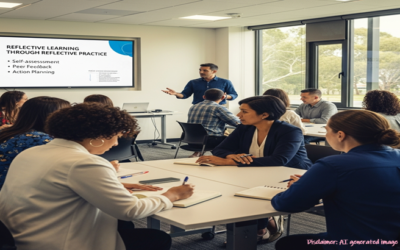

Schools are changing dramatically as they move towards a digital learning environment owing to technological advancements. Students are more engaged and have a stronger voice in their education when they have more possibilities to access knowledge, work with classmates and professors, and create new kinds of material. Based on each student’s unique learning needs and learning style, teachers may tailor their instruction using actionable information. Technology has a big impact on our community and schools in Pakistan in the following dimensions.
Communication
Communication had been developing even in the earlier days through the use of the telephone and the use of radio and telegraph to exchange messages to distant places. Today, in Pakistan the population has telephones as a means of necessity. Cellular phones are also now very effective and efficient not just as an accessory but as a guide to the everyday living of people. Many applications could be installed into this small gadget that could give many uses. An example of these applications is having a dictionary in the phone which is very helpful as a guide, and also the conversion of many measurements.
Lifestyle
The technological advancement has such a profound impact on people that it has changed everyone’s lifestyle. People no longer live the same way they did years ago. Change is not an insurmountable route when technology is highly accessible and people are eager to adopt new technologies. The way people live has significantly improved thanks to technology. It raises the living standard. Every action taken by men is matched with a certain device that may be able to assist men in some manner. Computers are one example of them, with which individuals do nearly all electronic tasks. As we have covered in our Future Technology course, entertainment on game consoles is currently so high quality that it nearly seems like. For leisure time, as also discussed in our Future Technology subject, entertainment concerning the gaming console is now in high definition that it is almost like life like that you can easily be addicted to it.
Read: The association between society and the progress of technology
The music industry is also at a greater pace in development. More and more developed machines are now more capable of handling greater amount of data in terms of music files. Gadgets are also handling many features like having a screen for viewing the music video. Technology also affects people in many different ways. An example of this is how people work. Before, many businesses did most of their transactions using only paper to list the day to day operations as well as the billings. Systems are now being developed and highly utilized by businesses to make their processes more effective than the traditional ways of doing it.
It is still feasible to do business without making a physical presentation. As long as they have digital currency or a credit card, anyone may do transactions online. The Internet provides everything from business to advertising, communication, gaming, and much more than one could ask for. Online purchases and product sales make up businesses. Advertising is consistent with the companies as well.
It is also possible for anybody to purchase flights online. With its e-learning plan, education was likewise on the brink of completely embracing technology. An increasing number of students are increasingly accessing the internet for forums and discussions. Students in classes are learning through the Internet. You can declare that you are performing well in school even if you are not physically present in the classroom. This is just another way that technology has influenced modern society’s behavior significantly. People are adapting to the changes brought about by technological advancements to keep up with its rapid advancement.
The Complex Cause of the Skill Deficit
It is possible to link the continual technological development, the flawed educational system, and the narrow labor export strategy to the lack of skilled workers. Poor curricula, insufficient teacher preparation, and little public and private investment in education were the main causes of educational shortcomings. Resolving the talent gap is not as important as solving the labor excess depression. Naturally, the need for new abilities would make some present skills obsolete due to the rapid advancements in technology.
Industrialization
Technology has contributed to the growth of industries or the process of industrialization. Industrialization is a term covering in general terms the growth in a society hitherto mainly agrarian of modern industry with all its circumstances and problems, economic and social. It describes in general term the growth of a society in which a major role is played by the manufacturing industry. The industry is characterized by heavy, fixed capital investment in plants and buildings by the application of science to industrial techniques and by mainly large-scale standardized production.
Read: Global Warming threat by livestock and its control
Industrialization is associated with the factory system of production. The family has lost its economic importance. The factories have brought down the prices of commodities, improved their quality, and maximized their output. The whole process of production is mechanized. Consequently, traditional skills have declined and a good number of artisans have lost their work. Huge factories could provide employment opportunities to thousands of people. Hence men have become workers in a very large number. The process of industrialization has affected the nature, character, and the growth of economy. It has contributed to the growth of cities or the process of urbanization.
Urbanization
Cities in Pakistan have expanded in tandem with the expansion of industry. An expansion of urban centers’ influence onto neighboring rural regions is referred to as urbanization. The process of switching from agriculture to other activities typical in cities and adopting new behavioral patterns as a result is known as urbanization. Therefore, urbanization cannot be considered to have occurred until a significant fraction of the population in the area moves into cities. Currently, urbanization is a global phenomenon. Both the number and scale of major cities have increased at an unparalleled rate in recent times. The process of industrialization has caused individuals to begin migrating into industrial locations in pursuit of work. Due to this the industrial areas developed into towns and cities.
Modernization
Modernization is a process that indicates the adoption of modern ways of life and values. It refers to an attempt on the part of the people particularly those who are custom-bound to adapt themselves to the present time, conditions, needs, styles, and ways in general. It indicates a change in people’s food habits, dress habits, speaking styles, tastes, choices, preferences, ideas, values, recreational activities, and so on. People in the process of getting themselves modernized give more importance to science and technology. Scientific and technological inventions have modernized societies in various countries. They have brought about remarkable changes in the whole system of social relationships and installed new ideologies in the place of traditional ones.
Development of Communication and Transportation Infrastructure
The development of transport and communication has led to national and international trade on a large scale. Road transport, the train service, ships, and airplanes have eased the movement of men and material goods. Post and telegraph, radio and television, newspapers and magazines, telephone and wireless, and the like have developed a great deal. Space research and the launching of satellites for communication purposes have further added to these developments. They have helped people belonging to different corners of Pakistan or the world to have regular contact.
Transformation
The economy is changing, and new social strata are emerging. The industrial economy has replaced the rural economy with the emergence of the factory system of production. The working class and the capitalist class are the two main classes that have emerged from the industrial or capitalist economy. Because their interests are opposed, these two classes are always at odds. The middle class, an intermediary class, has developed over time.
Unemployment
The problem of unemployment is a concomitant feature of the rapid technological advancement. Machines not only provide employment opportunities for men but they also take away the jobs of men through labor-saving devices. This results in technological unemployment.
Technology and war
The way that modern combat is conducted makes technology risky. Mankind’s concerns and anxieties are a result of weapons. They could easily wipe off humanity as a whole, demonstrating the potential abuse of technological advancements. Therefore, humankind faces more risk as technology advances.
Changes in social institutions
Technology has profoundly altered our modes of life. Technology has not spared the social institutions of its effects. The institutions of family, religion, morality, marriage, state, and property have been altered. Modern technology in taking away industry from the household has radically changed the family organization. Many functions of the family have been taken away by other agencies. People are becoming more secular, rational, and scientific but less religious in their outlook.
The foundations of religion have been upended by scientific inventions and discoveries. The role of the state or the area in which it operates has expanded. Thanks to modern technology, states are now able to provide for minorities and the weaker sections’ needs in terms of healthcare, education, and other necessities. Innovations in communication and transport are causing a transfer of responsibilities from local governments to the state’s central administration. Modern innovations have bolstered nationalism as well. The bureaucracy-driven modern governments have further dehumanized interpersonal relationships.
Environment
Technology helps us appreciate and comprehend the world we live in. In addition to the intended goods, the majority of contemporary technical processes also generate undesirable byproducts, which are referred to as industrial waste and pollution. While the majority of material waste is recycled during the industrial process, a variety of forms are discharged into the environment, where they have detrimental impacts on the ecosystem such pollution and unsustainable practices. The value that various social and political systems place on extra commodities and the devaluations placed on waste and pollution are established in diverse ways.
Although most technological advancements are originally created for their economic or ergonomic benefits, others are particularly developed with the environment in mind. In the past, more prosperity has led to a greater appreciation for clean environments and more productive processes because, after fundamental necessities are met, people may concentrate on less materialistic things like clean water and air. Technology has both discernible and subtle influences on the environment.
Read our blog: PakSci Mission