Explain the meaning of “competence” in the context of instruction

Teachers Competence

Competence means that teachers can play a critical role in helping students achieve their goals by guiding them and enabling them to use their new technological and cognitive abilities. In their capacity as learning facilitators, teachers support a variety of student-centered learning activities, assist students in reaching the correct conclusions, assist them in resolving challenging issues, and dispel misconceptions.

Teachers should encourage learning that is both extremely demanding and pertinent, giving students the chance to solve difficult challenges that they will probably face in their daily lives. The need for quality assurance and increased recognition of the teaching profession has led to an increase in interest in evaluating teacher competency on a global scale. A particular competency is a component of competence, which is a broad notion that encompasses the skills or capacities of individuals or organizations. Competency is a more atomistic and limited term used to describe specific skills. Even the best educational system fails in the absence of professional teachers, but with competent teachers, the system’s flaws may be mostly fixed.

Professional standards outline the knowledge and skills teachers must possess to give students and groups of people worthwhile and pertinent learning experiences. In education, teaching and learning are activities required to achieve a goal. Learning is facilitated by the teaching process. Teaching is the specialized application of information, abilities, and qualities intended to offer a distinctive service to satisfy the educational needs of society and the individual. The teaching profession is in charge of selecting the educational activities that will help the school achieve its educational objectives. Effective teaching is a craft with roots in the behavioral, applied, and practical sciences. It is believed that teaching involves energizing, leading, and assessing the learning objectives of the student.

ALSO READ: Compare and contrast remote learning versus open learning

Teaching staff quality has a direct impact on the quality of education. Building an excellent education is a topic that researchers debate: the quality of instruction. The swift advancements in education, both domestically and internationally, have prompted inquiries concerning teacher education and the qualities that support suggested prospects for professional growth and teacher preparation. Like many other emerging and developed nations, Pakistan places a high priority on education and the difficulties in producing qualified instructors. The caliber of its teachers will determine whether Pakistan’s educational goals are successful. A robust educational system is facilitated by competent and effective teachers. To face these difficulties, the traditional role of the teacher at the center of student learning is no longer sufficient.

Ten professional requirements for teachers based on the international education situation were provided by the education policy in 2009. The competencies of instructors, which range from performance and abilities to knowledge and comprehension, are spelled out in these standards. Educators must make sure that every student reaches their maximum potential. All of their students can learn, according to competent teachers, including how to gather information, comprehend complex material, pose and solve problems, evaluate and cast doubt on contradicting information, create alternative viewpoints, and synthesize, compare, and analyze evidence.

ALSO READ: Latest Stories & Science News

Fully Funded Scholarship at GIST University South Korea, 2026

Online applications for the Spring 2026 intake are now being accepted by the GIST University (Gwangju Institute of Science and Technology). The scholarship offered by GIST University, South Korea is available to students pursuing master’s, master’s leading to doctoral, and doctoral degrees. Candidates may be from anywhere in the world. Popular South Korean university GIST is located in Gwangju. Although many South Korean colleges, such as KAIST and UST, do charge an application fee, GIST is renowned for avoiding doing so. Without submitting a separate application, the GIST Scholarship is awarded to all overseas students. The scholarship covers tuition, food, lodging, health insurance, a monthly stipend, and airline tickets. Instruction is conducted mostly in English. Additional information on the financial rewards, application procedure, and prerequisites for the GIST Scholarship is provided below.

GIST University South Korea Scholarship Details

Host Country: South Korea
University: Gwangju Institute of Science and Technology (GIST)
Degree Level: Masters, PhD
Financial Benefits: Fully Funded
Deadline: 2nd October 2025

ALSO READ: Fully Funded Scholarships at King Abdullah University of Science and Technology (KAUST) 2025-2026

Degree Programs

Master of Science Program (M.S.) – 2 Years
Doctor of Philosophy Program (Ph.D.)—4 Years
Integrated M.S. and Ph.D. Program (M.S./Ph.D.)

GIST University Scholarship Benefits

GIST University offers “GIST Scholarships” for international students. The scholarship covers:

Full Tuition Fee Supported
Stipend for all international students
Housing
60% Health Insurance
Annual medical checkup
Flight Reimbursement (One Way)

Exemption of English Language Test

At GIST University, all instruction is given in English. The English language exam is not required to apply. You will need to submit your test results later if you were chosen.

Applying to GIST without a result from the English Proficiency Test is possible if you have earned your bachelor’s degree in an English-speaking nation (such as Australia, Canada, Ireland, New Zealand, the UK, or the USA).

Aside from that, all applicants need to submit the results of an official English proficiency exam, such as the TOEFL (IBT, PBT), IELTS, TOEIC, or TEPS.

TOEFL: iBT 80, PBT 550
IELTS: 6.5
TOEIC: 750
NEW TEPS: 285

Eligibility Criteria

Applicants from all countries can apply.
An applicant must have a bachelor’s degree that is equivalent to a Korean bachelor’s degree.
All documents must be submitted.

Apply for the GIST University Scholarship

Step 1: Upload the necessary files and submit the online application.
Step 2: After the application and the necessary paperwork are verified, you will get a call from the International Admissions Coordinator. (Use the web application to check My Status.)
Step 3: Results of admissions are communicated. Below is the official link.

Compare and contrast remote learning versus open learning

Open Learning

Open learning is a cutting-edge educational trend that began in the 1970s and has now spread to other areas of practice and research. Activities that improve learning chances inside formal education systems or expand learning opportunities outside of formal education systems are often referred to by this term. Methods of instruction in the classroom, interactive learning strategies, work-related training and education formats, learning community cultures and ecologies, and the creation and use of open educational materials are all examples of open learning. Despite the lack of a universally accepted, all-encompassing definition, the “needs of the learner as perceived by the learner” are frequently emphasized. The term ‘open learning’ means all things to all men; the term ‘open learning is often confused and used synonymously with the term ‘distance education.’

Open learning is a concept that makes learning more customer- and student-centered and a method that emphasizes access to educational options. As much as possible, learning gives the student the freedom to decide how, when, where, and what they want to study while staying within the limitations of any given education and training program. This implies that the learning process itself is more flexible in addition to making access to education more egalitarian, enabling anybody to begin the process of obtaining a certificate through higher education. One way to give flexibility is by:

  • The course/subject entry and exit times,
  • The mode of learning,
  • The mode of attendance,
  • The resources made available for learning,
  • The pace of learning,
  • The interaction between learners,
  • The support provided for learners, and
  • The methods of assessment.

ALSO READ: Evaluate the policies for teacher education in Pakistan and ways to improve it

Therefore, the phrase “flexible learning” is frequently used instead of “open learning” (Lewis, 1993), and the educational goal of “student-centered” learning is also grouped under the general term “open learning,” as proponents of this philosophy seek to empower people to take charge of their education. Their goal is for the student to become a strategic, self-reliant, and reflective expert learner (Ertmer and Newby, 1996).

In open learning, students play the role of active participants whose suggestions and opinions are taken into consideration. Students must have the freedom to voice their ideas on the options presented to them to exercise their right to choose. Any course creation must consider the motivations, goals, and preferences of the students in addition to meeting the learning objectives. Employees must be prepared to accept the chance of letting learners handle their education and work with them in such an endeavor. It would be expected that students’ reactions to flexible learning initiatives would be varied, given the dynamic and diverse nature of the student body.

When presented with new ways of teaching, students often need to develop new and unfamiliar learning techniques. Not only should this skills shortage be acknowledged, but they must be given the opportunities to develop these skills.

Note-taking and information-gathering abilities are traditionally taught to students; however, it is now required to incorporate study skills like group collaboration and presentation. It’s important to keep in mind that even while we want to help students become more self-sufficient learners, the tutor must remain a motivating and encouraging component of the student’s overall growth. The student needs instant and ongoing feedback on his or her progress since this not only gives the student a sense of accomplishment but also validates the learning technique that the student has chosen.

Open learning requires a strong sense of motivation. It demands a significant time and energy investment. The institution must provide its financial, material, and moral support for the endeavor if it hopes to encourage the person to embrace student-centered education methods and creative ways of student learning. The institution will become inferior, and workers will be sacrificed if such a course is taken. Academics still have too many teaching duties, which leaves them with little time to pursue research or teaching as scholars.

Remote Learning

Students who might not always be able to attend classes in person are taught through remote education, also known as distant learning. Distance education allows students to take lessons in the comfort of their own homes, offices, or classrooms, either live or recorded. As the price of providing high-quality education rises, educational institutions discover that their restricted funding keeps them from extending their courses, recruiting more teachers, or developing new buildings. Utilizing remote learning to optimize resources, they are pooling their efforts with those of others to create programming. Distance education is available locally, regionally, nationally, and worldwide via all available conferencing technologies.

In situations where face-to-face connection is not feasible, distance learning solutions allow students and teachers to communicate. Instead of transporting people, telecommunications systems provide information or instruction. Technology in remote places is significant and influences how people connect, what information resources are used, and the likelihood of the system being effective. Through the use of technology, students and teachers may engage and communicate when they are in different places. The learner might be at home, at the workplace, in the learning center, or in the classroom. A media studio, business, house, or classroom might be the instructor’s location.

ALSO READ: Fully Funded Scholarships at King Abdullah University of Science and Technology (KAUST) 2025-2026

Information, not people, is transported by technology. Both new information age equipment and a variety of well-known technologies are used to bridge the gap between professors and pupils. The number of channels that may be transmitted via any transmission media might be significantly increased by advances in digital compression technology, perhaps doubling or even tripling the channel capacity. Furthermore, distant learning technologies are expanding our understanding of how, where, and by whom students learn. No one technology is optimal for every application and circumstance. The ability of various technologies to meet educational demands will determine their successful deployment.

Information can be sent to the student via satellite, microwave, or fiber optic cable; television (broadcast, cable, or Instructional Television Fixed Services (ITFS); video cassette or disc; telephone (direct phone line or audio conferencing bridge); paper materials (text, study guide, or handout); computer (modem or floppy disc); and compressed video. Recent technological advancements have produced increasingly strong, adaptable, and reasonably priced systems. The foundation of information technology resources is growing at a startling rate. Since a lot has been discovered about integrating different types of technology into systems, the capacity to do so is expanding.

The majority of distant learning systems are hybrids, integrating several technologies such as computer connections, satellite, ITFS, microwave, cable, and fiber optic. Two-way computer connections, two-way audio, two-way video or graphics interactivity, and telephones (one-way video and two-way audio) are all ways to achieve interactivity. Although engagement may be delayed, it is still possible for students to contact teachers during office hours or through time spent with facilitators on-site. High student enrollment limits the quantity of interaction in the classroom. A large portion of computer network activity also occurs on a delayed basis. Interaction between audio and visuals is becoming more and more possible.

In the early days of remote learning, students in rural areas who lived far from an educational institution were the ones most frequently enrolled. Before going to the nearby institution to take a test, the student may read textbooks, send in assignments, watch a telecourse on television, and more. Although this approach is still in use, the usage of distance education has grown as technology has advanced and the cost of equipment has decreased. High upfront expenditures stopped electronically mediated learning from being widely used early on. Because distance learning may address some educational demands, it has been widely accepted.

As the concept of accountability became accepted and laws required certain courses in high school for students to be admitted to state colleges, telecommunications was examined as a way to provide student access to the required courses. Many rural school districts could not afford the special teachers to conduct required courses. Distance education met this need by providing courses in schools where teachers were not available or were too costly to provide for a few students. It also fulfilled a need for teacher training and staff development in locations where experts and resources were difficult to obtain. These systems link learner communities with each other and bring a wide array of experts and information to the classroom.

Technologies of Distance Education

Although the expansion of the Internet blurs the boundaries, distance education technologies are divided into two modes of delivery:

  1. Synchronous learning
  2. Asynchronous learning

ALSO READ: Researchers in Quantum Physics found evidence of “Negative Time”

Benefits of Distance Education

i. Distance learning can expand access to education and training for both the general populace and businesses since its flexible scheduling structure lessens the effects of the many time constraints imposed by personal responsibilities and commitments.
ii. Devolving some activities off-site alleviates institutional capacity constraints arising from the traditional demand on institutional buildings and infrastructure.
iii. Furthermore, there is the potential for increased access to more experts in the field and to other students from diverse geographical, social, cultural, economic, and experiential backgrounds.
iv. As the population at large becomes more involved in lifelong learning beyond the normal schooling age, institutions can benefit financially, and adult learning business courses may be particularly lucrative.
v. Distance education programs can act as a catalyst for institutional innovation and are at least as effective as face-to-face learning programs, especially if the instructor is knowledgeable and skilled.
vi. The improvement being made in distance education is growing in tandem with the constant technological advancements. Present-day online communication allows students to associate with accredited schools and programs throughout the world that are out of reach for in-person learning.
vii. By having the opportunity to be involved in global institutions via distance education, a diverse array of thought is presented to students through communication with their classmates.
viii. Learners become aware of the variations in interpretation and construction of meaning among a range of people
ix. Distance education has been a more cost-effective form of learning, and can sometimes save students a significant amount of money as opposed to traditional education.
x. Students can review their lessons more than once according to their needs. Students can then manipulate the coursework to fit their learning by focusing more on their weaker topics while breezing through concepts that they already have or can easily grasp.
xi. Distance learning may enable students who are unable to attend a traditional school setting, due to disability or illness such as decreased mobility and immune system suppression, to get a good education.

Read our blog: PakSci Mission
Fully Funded Scholarships at King Abdullah University of Science and Technology (KAUST) 2025-2026

The KAUST Scholarship is a fantastic chance to begin your academic journey at King Abdullah University of Science and Technology in Saudi Arabia. This post will discuss this scholarship, its advantages, and the application procedure in depth.

International students can apply for the King Abdullah University of Science and Technology (KAUST) Scholarship 2025–2026, which is completely supported. For master’s and doctoral programs, this grant offers complete tuition reimbursement, a living stipend of up to $30,000 per year, on-campus accommodation, health and dental insurance, and relocation assistance.

ALSO READ: The Excellence Scholarship InnovInOnco Graduate Programme for International Students in France 2025

King Abdullah University of Science and Technology (KAUST), a graduate research university founded in 2009, is committed to solving some of the most important scientific and technological problems facing Saudi Arabia and the rest of the world in the fields of food and health, water, energy, the environment, and the digital sphere. KAUST is an interdisciplinary institution inspired by curiosity.

Scholarship Overview

  • Level of Study: Masters / PhD
  • Institution(s): KAUST
  • Study in: Saudi Arabia
  • Courses Offered: Click here to find all the available degree programs.
  • Deadline: October 1, 2025

Scholarship Coverage

The beneficiary of the King Abdullah University of Science and Technology (KAUST) Scholarship receives:

  • Full Free Tuition Support
  • Monthly Living Allowance (From $20,000 to $30,000 annually)
  • On-Campus Housing
  • Medical and dental coverage
  • Relocation Support

Eligibility Criteria

The candidate must meet all of the requirements listed below to be eligible for the KAUST Scholarship:

  • Required Languages: English (score of 79 for TOEFL IBT or 6.5 for IELTS).
  • Eligible Countries: All world countries.
  • Applicants must meet all the entry requirements for the master’s or Ph.D. degree program.

Apply for the KAUST Scholarship

Please follow the following steps to avail this scholarship:

(1) Click here to start the online application through the application tool of KAUST.

(2) Upload the following documents via the KAUST online application tool:

  • Official university transcripts.
  • Curriculum Vitae (CV).
  • Statement of purpose.
  • Three letters of recommendation.
  • English language test score

(3) Submit the application.

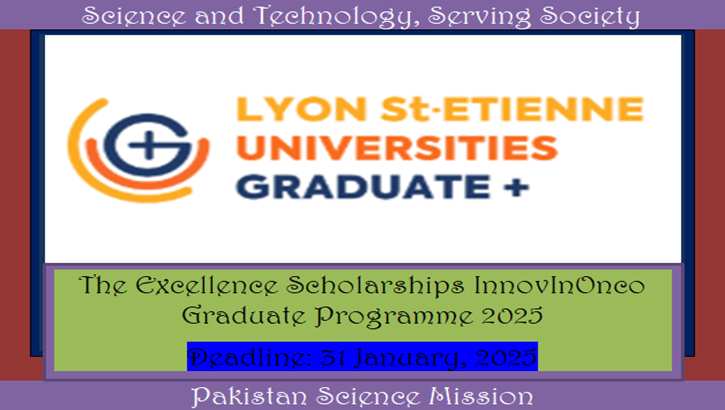
The Excellence Scholarship InnovInOnco Graduate Programme for International Students in France 2025

The Excellence Scholarship InnovInOnco has been launched for master’s students who want to enroll in one of the InnovInOnco graduate programs. These scholarships are intended for foreign students wishing to enroll in the master’s degree for the academic year 2024-2025.

The InnovInOnco Graduate Excellence Scholarship offers €10,000 per year to foreign students studying oncology in France for their Master 1 or Master 2 degrees. The goal of this award is to support academic achievement and cancer research opportunities.

It is a merit-based scholarship for Master’s degree students specializing in oncology.

Study fields

Eligible fields include:

Cancer Biology: Focus on the latest fundamental discoveries in the biological mechanisms of cancer—lectures given by internationally recognized researchers. The 1st semester consists of a series of seminars on the latest developments in oncology, a symposium organized by the students themselves, common to all 4 Cancer master’s courses, and a 2-month research internship. The 2nd semester consists of courses that enable students to build a research project in response to a research call, courses on technological innovations, and a 4-month research internship.
Therapeutic Innovations in Oncology: Focus on drug design, therapeutic innovations, and clinical trials in oncology in collaboration with professors from the Lyon Veterinary School (cancers in pets). The 1st semester consists of courses dedicated to drug design, clinical trials, and pharmaco-toxicology; a symposium organized by the students themselves, common to all 4 Cancer master’s courses; and a 2-month research internship. The 2nd semester consists of lectures organized by Lyon Veterinary School professors on spontaneous animal cancers and their potential as a model for studying human cancers, courses that enable students to build a research project in response to a research call, and a 4-month research internship.
Cancer Bioengineering: Focus on the transdisciplinary teaching of physicochemical properties of cancers and innovative technologies (biomechanics in 3D models, microfluidics, and new devices) to better approach the physiology of the tumor in vitro. The 1st semester consists of an introduction to the multidisciplinary complexity of cancer, lectures on innovative in vitro models, physical aspects of cancer, engineering projects, quantitative approaches, and a symposium organized by the students themselves, common to all 4 Cancer master’s courses. The 2nd semester consists of a 6-month research internship.

ALSO READ: Fellowship Program for Mainstreet Entrepreneurs at Northeastern University in the United States, 2025

Who Can Apply?

Applicants must:

Be international students residing outside France (dual citizenship with France is allowed).
Hold a Bachelor’s degree or have completed one year of a Master’s program in oncology or related fields (e.g., biosciences, biophysics, bioinformatics).

How to Apply?

  1. Prepare a single PDF file with the following:
    Proof of education (Bachelor’s or Master’s certificates).
    Curriculum Vitae (one-page resume).
    Motivation letter (one-page explanation of career goals).
    Academic transcripts.
    Work abstracts (research, dissertations, or publications, if applicable).
    English proficiency certificate (TOEFL, IELTS, or equivalent; not required for native English speakers).
    Copy of an official identity document.
  2. Email the PDF to: charlotte.riviere@univ-lyon1.fr, caroline.moyret-lalle@univ-lyon1.fr

Application Deadline

The application deadline is January 31, 2025.

Visit the Award Webpage for Details: InnovInOnco Graduate Excellence Scholarship 2025

Researchers in Quantum Physics found evidence of “Negative Time”

Researchers at the University of Toronto claim to have shown through groundbreaking quantum experiments that “negative time” is more than just a theoretical concept; it exists in a concrete, physical sense and merits further investigation.

It has long been known by scientists that light may appear to leave a substance before entering it; this phenomenon is thought to be an illusion brought on by the way matter distorts wavelengths. A recent report.

The results have drawn skepticism and international attention, but they have not yet been published in a peer-reviewed publication.

ALSO READ: Earth bacteria ‘rapidly colonized’ a sample from Japan’s precious asteroid Ryugu

The researchers demonstrate that these puzzling findings do not point to a fundamental change in how we think about time, but rather to a strange feature of quantum physics.

“This is difficult material, even for us to discuss with other physicists. Aephraim Steinberg, a professor of experimental quantum physics at the University of Toronto, stated, “We are frequently misunderstood.”

Steinberg supports the usage of the phrase “negative time” despite the fact that it may seem like a notion taken from science fiction in the hopes of igniting more in-depth conversations about the enigmas of quantum physics.

The idea of “negative time” has generated interest as well as skepticism, especially from well-known scientists.

In one YouTube video that was watched by more than 250,000 people, German theoretical physicist Sabine Hossenfelder criticized the work, saying, “The negative time in this experiment has nothing to do with time—it’s just a way to describe how photons travel through a medium and how their phases shift.”

Angulo and Steinberg resisted, claiming that their study fills important knowledge gaps about why light doesn’t always move at the same pace.

Steinberg noted that no credible scientist had questioned the experimental findings, even acknowledging the controversy surrounding the aggressive headline of their work.

He said that although real-world uses are still elusive, the results provide new opportunities to study quantum phenomena.

Evaluate the policies for teacher education in Pakistan and ways to improve it

Policy on Teacher Education

1. Pre- and in-service teacher education policies must be long-term, enshrined in a vision, set of criteria, methods, and operational processes that are inclusive, offer opportunities to elevate teachers’ standing and grant local decision-making authority.

2. Experts and professional associations must have a regular, official social discussion forum at the provincial and national levels and a systematic institutional mechanism to engage the “voices of teachers” in the policy-making processes. It was suggested in the MoE position paper on teacher education (2004) that the Curriculum and Training Wings of the Ministry of Education should oversee the establishment of a National Teacher Education Forum (NTEF) for policy inputs. This proposal needs immediate implementation with proper representation of stakeholders. This demand has been reiterated by teachers in a recent initiative to capture teachers’ voices of courage and concern at World Teachers Day 2004 (ITA, 2004).

3. A robust and credible database on teachers needs to be established within EMIS at national and sub-national levels for information on pre-service and in-service profiles, disaggregated by level, subject, gender, and location. This database must reflect both government and non-state providers. Such a database will help in evidence-based policy-making, planning, and financing. It would also help to monitor PRSP indicators.

ALSO READ: Earth bacteria ‘rapidly colonized’ a sample from Japan’s precious asteroid Ryugu

4. To consistently give objective data for iterative policy modification, reflection, and upgrading, research on classroom practice, student accomplishments, and teacher education programs (pre- and in-service) must feed back into theory. The Ministry and Departments of Education may contract with universities and their Institutes of Education Research (IER) for this effort.

5. Together with funding arrangements, a policy proposal for connections between elementary/school education and higher education must be prepared. In particular, for secondary education, this will provide a consistent supply of specialized instructors in language, science, math, social studies, and information technology. Thus, tertiary institutions may mobilize teachers with a little help from educational approaches. School education can use the current indigenous scholarship programs financed by USAID and GoP at universities, in keeping with the sector-wide principles of ESR. To achieve this, the Ministry of Education, the Higher Education Commission (HEC), and the provincial education agencies can work together.

6. The policy must create space for addressing the status of teachers through their professional standing, certification protocols, as well as through benefits and salary packages which illustrate the critical importance of an active frontline change agent to implement education reforms and transform education practices.

7. The dilemma of teacher placement in remote and rural locations requires the implementation of both monetary and nonmonetary incentive schemes for educators. Particularly in remote places, this might be addressed with alluring assistance packages that include housing and transportation choices.

8. Resource allocations for teacher education need to be revisited through a systematic trend exercise to capture evidence on allocation patterns and inform policy. The work should focus on designing new resource templates for teacher education (pre- and in-service) and revising the financing requirements for this critical area of human resource development.

ALSO READ: Explore the curriculum and framework for teacher education in Pakistan

    Improving Teacher Education

    There is a consensus amongst all stakeholders that the quality of teachers in the public sector is unsatisfactory. The poor quality of teachers in the system in large numbers is owed to the mutations in governance, an obsolete pre-service training structure, and a less-than-adequate in-service training regime. The presence of incompetence in such a huge quantity and the permeation of malpractices in the profession have eroded the once exalted position enjoyed by teachers under the Eastern cultural milieu. Teaching has become the employment of last resort for most educated young people, especially males. Reform is required in all areas: pre-service training and standardization of qualifications; professional development; teacher remuneration, career progression, and status; and governance and management of the teaching workforce. The growth of the private sector is adding new complexities to the teaching profession and needs to be taken into account in any reform of the system.

    Read our blog: PakSci Mission
    Earth bacteria ‘rapidly colonized’ a sample from Japan’s precious asteroid Ryugu

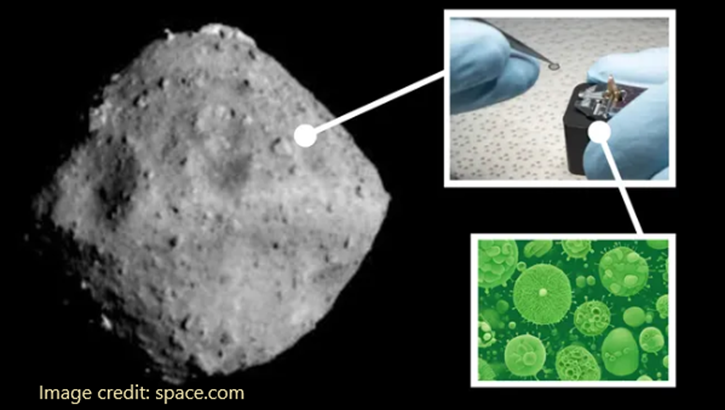
    Researchers have found that after being transported to Earth, a sample of the asteroid Ryugu was infested with life forms from Earth. The study demonstrates the efficacy of terrestrial microorganisms in colonizing extraterrestrial materials.

    The samples under investigation were from the spacecraft Hayabusa2, operated by the Japan Aerospace Exploration Agency (JAXA), which launched in December 2014 and made contact with Ryugu in June 2018. After monitoring the asteroid for a year, Haybusa2 dove to the surface and collected a sample. The asteroid is about 3,000 feet (900 meters) in diameter.

    On December 6, 2020, the Ryugu sample was sent back to Earth, but Haybusa2 went on to investigate further asteroids. The sample was divided up and sent to several scientific teams, including the one responsible for this remarkable finding.

    “We found microorganisms in a sample returned from an asteroid.”.

    ALSO READ: Astronomers capture a photograph of Earth’s vanishing mini-moon: Will it reappear as a “second moon?”

    After first appearing on the rock, they gradually dispersed until eventually going extinct, Imperial College London team leader Matthew Genge told Space.com. “The shift in the quantity of microorganisms verified that these were live bacteria. However, it also suggested that they were terrestrial in origin and had only recently colonized the specimen before our studies.

    The scientists identified the findings as filamentous microorganisms since it appeared as rods and threads of organic materials. Although the team is unsure of the precise sort of microbes they were, Genge has a fair sense of what they may be.

    The researcher stated, “It is impossible to identify their exact type without studying their DNA.” “However, they were most likely bacteria such as Bacillus since these are very common filamentous microorganisms, particularly in soil and rocks.”

    It demonstrates that microbes may easily metabolize and survive on materials from other planets. Homegrown organic matter is plentiful on Earth, but extra-martian organic matter may sustain an ecosystem on worlds like Mars.
    We can never fully rule out terrestrial contamination since terrestrial microorganisms are the finest colonizers on Earth,” the researcher added. “As long as you know where it comes from, contamination is usually not an issue. The issue arises when scientists try to assert that a specimen’s “pristine” state proves that its traits are alien.

    The research was published in the journal Meteoritics & Planetary Science.

    Read the full article here.

    Astronomers capture a photograph of Earth’s vanishing mini-moon: Will it reappear as a “second moon?”

    A stunning photograph from the Two-Meter Twin Telescope in Spain shows a transient mini-moon that was entangled by Earth’s gravity for over two months before returning to the solar system. The gravitational pull of our planet attracted the near-Earth asteroid (NEO) 2024 PT5. Scientists examining this “second moon,” such as Carlos de la Fuente Marcos of the Universidad Complutense de Madrid, knew from the beginning of its occupation that it would be a “temporary capture” that would only last a few weeks.

    Officially, the mini-moon is called asteroid 2024 PT5. Initially connecting with Earth on September 29, 2024, the mini-moon departed our planet’s orbit at 10:43 A.M. EST (1543 GMT) on Monday, November 25, failing to stay long enough to observe Thanksgiving on Thursday, November 28.

    Marcos and his associates have been examining it using the Two-meter Twin Telescope (TTT), run by the Santa Cruz de Tenerife, Spain-based Instituto de Astrofísica de Canarias (IAC). As a result, the team was able to learn several things about the asteroid, such as the possibility that it is a fragment of the moon that was pierced by an asteroid impact. The departure of 2024 PT5 and the end of its tenure as Earth’s second moon did not cause the astronomers to cry too much, but they nevertheless managed to image it as it passed.

    “The ‘see-you-soon’ picture of 2024 PT5 was acquired on Monday by Dr. Miquel Serra-Ricart, a member of our collaboration,” Marcos told Space.com via email. “The observation came from the TTT.”

    ALSO READ: Chinese researchers demonstrate the efficacy of early insulin treatment for type 2 diabetes

    But don’t let this leave make you unhappy. The asteroid, which is 37 feet wide (11.2 meters), or six stacked Arnold Schwarzeneggers, will return like Arnie from “The Terminator.” Will 2024 PT5 get another opportunity to orbit the Earth as a second moon?

    This asteroid is often found in the Arjuna asteroid belt, a secondary asteroid belt made up of rocks that orbit the sun in orbits that are very similar to Earth’s, Marcos told Space.com. The average distance between these Arjuna asteroids and the central star of the solar system is around 93 million miles (150 million km).

    The next few approaches of 2024 PT5 can be analyzed using the NASA JPL small body lookup database to at least tentatively determine which will fit the requirements for its capture.

    The database, which includes information on the orbits of more than 3.3 million known asteroids and comets, indicates that 2024 PT5 will next approach Earth on January 9, 2025. At this point, the asteroid will be traveling at around 2,300 mph (3,700 kph) and will approach Earth within 1.1 million miles (1.8 million km).

    This suggests that the asteroid may be moving a bit too quickly to be gravitationally captured by Earth during this encounter, which will also see it approach the moon closely a few days later.
    Astronomers will then have to wait until 2024 PT5 returns, since its next near approach is scheduled for November 8, 2055.

    At that point, the asteroid will approach Earth more slowly—just 1,498 miles per hour—but it will only go within 3.3 million miles. This implies that the 2055 approach could be just a bit too broad for PT5 to be captured by Earth as a mini-moon in 2024.

    Fellowship Program for Mainstreet Entrepreneurs at Northeastern University in the United States, 2025

    The Northeastern University 2025 Fellowship Program for Mainstreet Entrepreneurs is providing ten small company entrepreneurs from Maine, Massachusetts, and Rhode Island with an exceptional educational experience. The mission of the Northeastern Lab for Inclusive Entrepreneurship (NL4IE) is to contribute to economic development and community resilience by promoting inclusive, equitable innovation and entrepreneurship and assisting small businesses in addressing their technical and managerial challenges.

    Inclusive Entrepreneur Fellows use Northeastern University’s entrepreneurial tools, mentoring networks, and online workshops to tackle important business issues. Some in-person events are held at Northeastern University’s Boston Campus, but most of the program is conducted online. Joining the fellowship program is free of charge.

    Benefits of the Northeastern University Fellowship Program

    Fellows engage in online workshops, network with seasoned mentors, and use Northeastern University’s worldwide entrepreneurial ecosystem’s resources during the 20-week program.

    Four online workshops are led by seasoned educators who have owned small businesses themselves. Every three-week session necessitates three to four hours of reading and conversation with other Fellows and the instructor. The foundation of the fellowship is the workshops, in which participation is required. In order to demonstrate their newly gained competencies, Northeastern University awards fellows with a digital badge. Furthermore, in March and August, Fellows will convene in Boston for full-day educational programs.

    In addition to the courses, fellows will collaborate with student teams to address business problems by utilizing the extensive Northeastern network of professionals.

    Requirements for Northeastern University Fellowship Program

    Small company entrepreneurs who meet the following requirements and wish to grow their companies and improve their communities are eligible to apply for the Inclusive Entrepreneur Fellowship program:

    founder, owner, or chief executive officer of a small company that has been in operation for at least three years in Massachusetts, Maine, or Rhode Island
    21 years of age or older on January 10, 2025, the application deadline
    Fluent in English

    A person who resides legally in the District of Columbia, the 50 (50) United States, and its territories
    For-profit businesses operating in the US that were established by US legislation

    To get the most out of this 20-week program, which is delivered primarily online from March to July, business owners are asked to invest their time to engage in the following:

    • Attend the program orientation, mid-point meeting, and end-of-program debriefing
    • Participate in convenient online workshops
    • Participate in a mentoring network
    • Create a business growth plan throughout the program

    Application Deadline

    January 10, 2025

    Country to study: United States
    School to study: Northeastern University

    How to Apply

    Want to apply? Go to Northeastern University on docs.google.com

    For more details, visit: Northeastern University website.