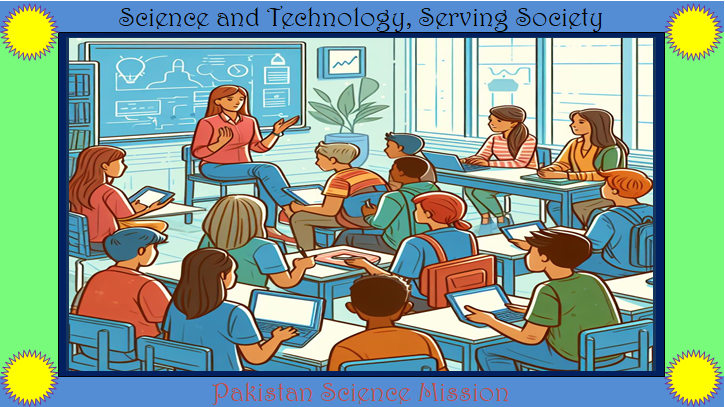
Roles and responsibilities of local organizations, parents, and teachers in community development; teachers’ personalities can inspire kids

Role and Responsibilities of Partners in Community

It’s true that “two heads are better than one” when it comes to fostering families and children holistically. The individuals, teachers, and groups that comprise a community can achieve goals that neither could reach on their own by cooperating, thinking ahead, and making plans. Via cooperative collaborations, diverse partners shape their comprehensive efforts. Communities now have a framework for planning, organizing, and carrying out their ideas thanks to these collaborations. A comprehensive strategy that strengthens families and children is designed through collaborative partnerships. Developing a cooperative relationship is a multifaceted process.

Read: The Response of Pakistani Society to Technological Advancements

It involves:
• recognizing opportunities for change;
• mobilizing people and resources to create changes;
• developing a vision of long-term change;
• seeking support and involvement from diverse and non-traditional partners;
• choosing an effective group structure;
• building trust among collaborators; and
• developing learning opportunities for partners.
Although the effort takes time and requires careful attention, it is essential to create strong, workable partnerships that produce lasting change.

“Teacher personality” as the inspiration

The psychological characteristics of a teacher are crucial because, according to Callahan (1966), a teacher is considered to have a desirable teaching personality if they can establish and uphold a classroom or learning atmosphere where pupils are motivated to study and feel at ease.
According to research, students are effectively oriented toward teachers whereas teachers are cognitively oriented toward them. Thus, a teacher’s personality influences learning and teaching in the emotive, cognitive, and psychomotor domains both directly and indirectly (LEW, 1977).

Read: The association between society and the progress of technology

In research, Marchbanks (2000) used a 110-question questionnaire to look at the personalities of sixty University of North Carolina at Chapel Hill students. Since these are the fundamental character attributes of an effective elementary school teacher, the features of passion, patience, cooperation, authoritativeness, and inventiveness were specifically examined. In addition to instructing, correcting, and engaging their pupils’ minds, he claims that teachers in the twenty-first century are also accountable for the general well-being of their charges. Being a good teacher requires meeting many more qualifications because they are responsible for these extra responsibilities. Now let’s review the personality qualities required to successfully complete all of the aforementioned responsibilities.

Elementary school teachers need the following characteristics:
•strong interpersonal and communication skills
•a genuine interest in children and respect for their individuality
•the ability to sense children’s individual needs
•the ability to be creative, imaginative, patient, energetic, organized and resourceful
•the ability to establish rapport between children and parents
•strong leadership and teamwork skills and a good sense of humor•a high level of dedication to work which often impacts personal lifestyle choices
•a clear, pleasant speaking voice and the ability to convey confidence
•positive conflict resolution skills and the ability to handle stress well.

Thompson, Greer, and Greer said that “every teacher should possess twelve characteristics such as displaying fairness, having a positive outlook, being prepared, using a personal touch, possessing a sense of humor, possessing creativity, admitting mistakes, being forgiving, respecting students, maintaining high expectations, showing compassion, and developing a sense of belonging for students”. Let us read these characteristics as given below:

1) Fairness

Fairness is one of the characteristics of the student’s favorite teachers. Humans possess an inbuilt sense of fair play. Whenever a person violates, the other person in this situation is prone to react negatively.
Any impression of favoritism, or lack of fairness, leaves scars on the lives of persons that last forever. The students report in great detail, the unfair actions of their teachers when they had negative experiences of competition between classmates, even after many years have passed.

2) Positive Attitude

Another characteristic that students like most is the positive attitude and approach of the teachers they use in the classroom. Scholars suggest that effective teachers are those who use meaningful verbal praise to get and keep students actively participating in the learning process. Effective teachers are generally positive-minded individuals who believe in the success of their students as well as their own ability to help students achievements.
If the teachers have a positive attitude they “catch students doing things right” rather than “catching them doing something wrong.” The students often recall praise and recognition that was given by their teachers at schools, and they point to the confidence and direction that often resulted in their lives.

Read: The impact of effective communication on classroom management

3) Preparedness

One quality that college students often express about their favorite teachers is their competence and mastery of the subject matter being taught. During a study, pupils noted that behavior issues were less common in classrooms with well-prepared teachers. In addition to being less likely to overlook the onset of potentially disruptive conduct, a well-prepared teacher is more likely to be able to spend time during lessons to observe and address behavioral issues. Educators who have not allocated enough time for planning and preparation may find themselves preoccupied with their tasks and fail to notice the warning indications of misconduct. In the end, this causes students to become frustrated, interfere frequently, and squander important teaching time.

4) Personal Touch

Teachers who are connected personally with their students; call them by name, smile often, ask about students’ feelings and opinions, and accept students for who they are. As well as the teachers who tell stories of their own life events that relate to the subject matter currently being taught, motivate students’ interest and endorse bonding with the students. Teachers who show interest in their students have interested students.

5) Sense of Humor

If a teacher has the ability to break the ice in difficult situations with the use of humor, this is an extremely valuable asset for teaching. According to McDermott & Rothenberg (2000), students enjoy teachers with a sense of humor and remember those teachers who made learning fun. Good teachers enjoy a laugh with the class occasionally.

6) Creativity

Students always like the unusual things that their teachers do in creative ways. The construction of models or things from waste like plastic bottles provides a field into which children could go and work by themselves quietly on academic activities like puzzles and word finds. Fun activities arranged by teachers in the classroom encourage the students to learn. Teachers can use unique ways of motivating their classes. Teacher can set a reward for the class on reaching a particular academic goal. For example, a teacher can give extra marks on the work done by the students in a creative way.

7) Willingness to Admit Mistakes

Like everybody, teachers may make mistakes. Sometimes students may know when their teachers make mistakes. Unfortunately, some teachers try to let the mistakes go unnoticed or cover them quickly. Teachers who recognize their mistakes in a very humble and pleasant way and apologize to them. This act teacher provides an excellent model for the students, and they may be remembered as a good teacher.

8) Forgiving

Effective teachers reflect a willingness to forgive students for misbehavior. For example, if a student repeatedly asks irrelevant questions and detracts others from the lesson. The teacher can simply say the question is irrelevant and direct the student to further study.

9) Respect

Teachers want their kids to respect them. Students always show respect for professors who treat them with dignity. Respect can be instilled in students by effective teachers in a variety of ways, such as by speaking with them in private after misbehavior rather than in front of others or by keeping individual grades on papers secret. Sensitivity to pupils’ feelings and persistent avoidance of circumstances that cause unnecessary discomfort are traits of good teachers.

10) High expectations

Teachers with positive attitudes also possess high expectations for success. Teachers’ expectation levels affect the ways in which teachers teach and interact with students. Generally, students either rise to their teachers’ expectations or do not perform well when expectations are low or non-existent. The best teachers have the highest standards. They consistently challenge their students to do their best.

11) Compassion

Hopefully, school is a place where children can learn and be nurtured in an emotionally safe environment. Sometimes in youngsters’ classrooms, there may be a significant amount of cruelty and hurt feelings. In these situations, a caring teacher tries to reduce the impact of hurt feelings on learning.

12) Sense of Belonging

In their classes, teachers fostered a sense of familial unity. A range of techniques, like cooperative class goals, picture albums, and random acts of kindness rewards, foster a sense of community and belonging while preserving an emotionally secure learning environment. Additionally, good educators took aggressive steps to stop cruel and hurtful actions like bullying and taunting. Skilled educators are aware that children learn much more effectively when they feel both physically and emotionally safe.
The most significant element influencing pupils’ motivation is the caliber of their teachers.

Read our blog: PakSci Mission

The Response of Pakistani Society to Technological Advancements

Schools are changing dramatically as they move towards a digital learning environment owing to technological advancements. Students are more engaged and have a stronger voice in their education when they have more possibilities to access knowledge, work with classmates and professors, and create new kinds of material. Based on each student’s unique learning needs and learning style, teachers may tailor their instruction using actionable information. Technology has a big impact on our community and schools in Pakistan in the following dimensions.

Communication

Communication had been developing even in the earlier days through the use of the telephone and the use of radio and telegraph to exchange messages to distant places. Today, in Pakistan the population has telephones as a means of necessity. Cellular phones are also now very effective and efficient not just as an accessory but as a guide to the everyday living of people. Many applications could be installed into this small gadget that could give many uses. An example of these applications is having a dictionary in the phone which is very helpful as a guide, and also the conversion of many measurements.

Lifestyle

The technological advancement has such a profound impact on people that it has changed everyone’s lifestyle. People no longer live the same way they did years ago. Change is not an insurmountable route when technology is highly accessible and people are eager to adopt new technologies. The way people live has significantly improved thanks to technology. It raises the living standard. Every action taken by men is matched with a certain device that may be able to assist men in some manner. Computers are one example of them, with which individuals do nearly all electronic tasks. As we have covered in our Future Technology course, entertainment on game consoles is currently so high quality that it nearly seems like. For leisure time, as also discussed in our Future Technology subject, entertainment concerning the gaming console is now in high definition that it is almost like life like that you can easily be addicted to it.

Read: The association between society and the progress of technology

The music industry is also at a greater pace in development. More and more developed machines are now more capable of handling greater amount of data in terms of music files. Gadgets are also handling many features like having a screen for viewing the music video. Technology also affects people in many different ways. An example of this is how people work. Before, many businesses did most of their transactions using only paper to list the day to day operations as well as the billings. Systems are now being developed and highly utilized by businesses to make their processes more effective than the traditional ways of doing it.

It is still feasible to do business without making a physical presentation. As long as they have digital currency or a credit card, anyone may do transactions online. The Internet provides everything from business to advertising, communication, gaming, and much more than one could ask for. Online purchases and product sales make up businesses. Advertising is consistent with the companies as well.

It is also possible for anybody to purchase flights online. With its e-learning plan, education was likewise on the brink of completely embracing technology. An increasing number of students are increasingly accessing the internet for forums and discussions. Students in classes are learning through the Internet. You can declare that you are performing well in school even if you are not physically present in the classroom. This is just another way that technology has influenced modern society’s behavior significantly. People are adapting to the changes brought about by technological advancements to keep up with its rapid advancement.

The Complex Cause of the Skill Deficit

It is possible to link the continual technological development, the flawed educational system, and the narrow labor export strategy to the lack of skilled workers. Poor curricula, insufficient teacher preparation, and little public and private investment in education were the main causes of educational shortcomings. Resolving the talent gap is not as important as solving the labor excess depression. Naturally, the need for new abilities would make some present skills obsolete due to the rapid advancements in technology.

Industrialization

Technology has contributed to the growth of industries or the process of industrialization. Industrialization is a term covering in general terms the growth in a society hitherto mainly agrarian of modern industry with all its circumstances and problems, economic and social. It describes in general term the growth of a society in which a major role is played by the manufacturing industry. The industry is characterized by heavy, fixed capital investment in plants and buildings by the application of science to industrial techniques and by mainly large-scale standardized production.

Read: Global Warming threat by livestock and its control

Industrialization is associated with the factory system of production. The family has lost its economic importance. The factories have brought down the prices of commodities, improved their quality, and maximized their output. The whole process of production is mechanized. Consequently, traditional skills have declined and a good number of artisans have lost their work. Huge factories could provide employment opportunities to thousands of people. Hence men have become workers in a very large number. The process of industrialization has affected the nature, character, and the growth of economy. It has contributed to the growth of cities or the process of urbanization.

Urbanization

Cities in Pakistan have expanded in tandem with the expansion of industry. An expansion of urban centers’ influence onto neighboring rural regions is referred to as urbanization. The process of switching from agriculture to other activities typical in cities and adopting new behavioral patterns as a result is known as urbanization. Therefore, urbanization cannot be considered to have occurred until a significant fraction of the population in the area moves into cities. Currently, urbanization is a global phenomenon. Both the number and scale of major cities have increased at an unparalleled rate in recent times. The process of industrialization has caused individuals to begin migrating into industrial locations in pursuit of work. Due to this the industrial areas developed into towns and cities.

Modernization

Modernization is a process that indicates the adoption of modern ways of life and values. It refers to an attempt on the part of the people particularly those who are custom-bound to adapt themselves to the present time, conditions, needs, styles, and ways in general. It indicates a change in people’s food habits, dress habits, speaking styles, tastes, choices, preferences, ideas, values, recreational activities, and so on. People in the process of getting themselves modernized give more importance to science and technology. Scientific and technological inventions have modernized societies in various countries. They have brought about remarkable changes in the whole system of social relationships and installed new ideologies in the place of traditional ones.

Development of Communication and Transportation Infrastructure

The development of transport and communication has led to national and international trade on a large scale. Road transport, the train service, ships, and airplanes have eased the movement of men and material goods. Post and telegraph, radio and television, newspapers and magazines, telephone and wireless, and the like have developed a great deal. Space research and the launching of satellites for communication purposes have further added to these developments. They have helped people belonging to different corners of Pakistan or the world to have regular contact.

Transformation

The economy is changing, and new social strata are emerging. The industrial economy has replaced the rural economy with the emergence of the factory system of production. The working class and the capitalist class are the two main classes that have emerged from the industrial or capitalist economy. Because their interests are opposed, these two classes are always at odds. The middle class, an intermediary class, has developed over time.

Unemployment

The problem of unemployment is a concomitant feature of the rapid technological advancement. Machines not only provide employment opportunities for men but they also take away the jobs of men through labor-saving devices. This results in technological unemployment.

Technology and war

The way that modern combat is conducted makes technology risky. Mankind’s concerns and anxieties are a result of weapons. They could easily wipe off humanity as a whole, demonstrating the potential abuse of technological advancements. Therefore, humankind faces more risk as technology advances.

Changes in social institutions

Technology has profoundly altered our modes of life. Technology has not spared the social institutions of its effects. The institutions of family, religion, morality, marriage, state, and property have been altered. Modern technology in taking away industry from the household has radically changed the family organization. Many functions of the family have been taken away by other agencies. People are becoming more secular, rational, and scientific but less religious in their outlook.

The foundations of religion have been upended by scientific inventions and discoveries. The role of the state or the area in which it operates has expanded. Thanks to modern technology, states are now able to provide for minorities and the weaker sections’ needs in terms of healthcare, education, and other necessities. Innovations in communication and transport are causing a transfer of responsibilities from local governments to the state’s central administration. Modern innovations have bolstered nationalism as well. The bureaucracy-driven modern governments have further dehumanized interpersonal relationships.

Environment

Technology helps us appreciate and comprehend the world we live in. In addition to the intended goods, the majority of contemporary technical processes also generate undesirable byproducts, which are referred to as industrial waste and pollution. While the majority of material waste is recycled during the industrial process, a variety of forms are discharged into the environment, where they have detrimental impacts on the ecosystem such pollution and unsustainable practices. The value that various social and political systems place on extra commodities and the devaluations placed on waste and pollution are established in diverse ways.

Although most technological advancements are originally created for their economic or ergonomic benefits, others are particularly developed with the environment in mind. In the past, more prosperity has led to a greater appreciation for clean environments and more productive processes because, after fundamental necessities are met, people may concentrate on less materialistic things like clean water and air. Technology has both discernible and subtle influences on the environment.

Read our blog: PakSci Mission

The association between society and the progress of technology

Technology and society refers to cyclical co-dependence, co-influence, co-production of technology and society upon the other (technology upon culture, and vice-versa). Technology is the creation, application, and understanding of tools, equipment, crafts, techniques, systems, or organizational procedures to resolve issues or carry out certain tasks. It may also be used to describe the gathering and application of said equipment, methods, and instruments.

It has the ability to both amplify and mitigate the effects of human activity. In tackling climate change, the role of technology has lately gained prominence in both research and policy. technical change is “in the driver’s seat” because climate change takes decades or even centuries to manifest. This is because, while technical systems are mostly rigid in the short term, they are extremely changeable over extended periods of time.

Technology and society

This synergistic relationship between society and technology occurred from the dawn of humankind, with the invention of simple tools and continues into modern technologies such as the printing press and computers.

Read: The impact of effective communication on classroom management

These days, technology is a trend in practically every area of the future. Everything had been behaving in accordance with how technology operates. from the development of new machinery to the applications of tiny, lately well-known technologies. In terms of technology, practically everything that is established or newly generated is in accordance with how technology impacts it. As new, better methods begin to appear, the old ways of doing things are starting to gradually disappear. There are drawbacks to technology, even when one first begins to study it. People always see technology as having two sides: on the one hand, it helps them, but on the other, it has negative effects on the environment and society.

It is easy to distinguish today’s society from that of many years ago based on how it looks and feels. Numerous domains and facets of human existence have been impacted by technology, ranging from daily routines to societal, political, and ethical concerns. As technology advanced to meet people’s requirements in its applications—whether to facilitate labour or get joy and happiness from technological products—people also underwent significant transformation. If every impact of technology on how society is changing were to be listed and discussed, the list would be rather lengthy. Individuals are finding items that cater to their demands these days. Even communication is now very effective that distance is not an issue anymore. Even of greater distance, many people are able to be in touch with each other. Technology changes society by changing our environment to which we in turn, adapt. This change is usually in the material environment, and the adjustment we make to the changes often modifies customs and social institutions.

Read our blog: PakSci Mission

The impact of effective communication on classroom management

The phrase “classroom management” refers to strategies used by educators to both avoid misbehavior and address it when it does occur. Put otherwise, it refers to the methods educators use to keep things under control in the classroom. One of the things that new instructors dread the most about teaching is managing the classroom. Ineffective classroom management can have the unintended consequence of making learning less effective for the pupils. It may lead to stress and dissatisfaction for the instructor and, in the end, drive people to quit teaching.

To obtain successful educational outcomes, instructors must be able to identify classrooms and control their pupils’ behavior. While competent behavior management creates the conditions for successful instruction, it does not ensure it. Classroom behavior issues are inversely caused by extremely successful training, but they are not eliminated.

It takes careful thinking and preparation to set up a classroom in a way that encourages good student behavior. The classroom environment is organized by highly competent instructors in a way that minimizes the possibility of improper student behavior, fosters positive student relationships, and positions students for success.

The following elements must be taken into consideration for effective classroom organization.

  • Creating a physical arrangement that eases traffic flow, minimizes distractions, and provides teachers with good access to students to respond to their questions and better control behavior.
  • Making efficient use of classroom time, including transitions between various classroom activities.
  • Ensuring that the nature and quality of student interactions is positive.
  • Communicating appropriate behaviors for particular classroom activities.

For instance, during cooperative learning exercises, students would be required to engage with one another; nevertheless, when individuals work at their seats, this may not be the case.
Education experts state that the goal of school and classroom management is to develop and foster self-control in students by means of fostering positive behavior and accomplishment on the part of the students. Thus, the idea of classroom and school management is closely related to academic accomplishment, teacher effectiveness, and behavior on the part of both teachers and students.

Read: Importance of communication skills for effective teaching

Three main areas are the emphasis of classroom management: behavior management, covenant management, and contents management. Effective teaching approaches include a set of observable aspects that define and elaborate on each of these topics. Studies have demonstrated that the efficacy of teaching and learning is significantly impacted by a high prevalence of disciplinary issues in the classroom. It has been shown that educators who deal with these kinds of problems often neglect to organize and provide relevant learning activities. Additionally, they frequently fail to include variation in their lesson plans and infrequently encourage pupils to debate or assess the content they are learning. Additionally, there is infrequent monitoring of students’ understanding or seat work. In contrast, strong and consistent management and organizational skills have been identified as leading to fewer classroom discipline problems.

Behavior management strategies

The most effective teachers

  • manage behavior in their multi-ethnic, multi-cultural classrooms.
  • develop and use classroom rules and routines?
  • use classroom consequences that work?
  • design positive behavioral supports for challenging behaviors?
  • avoid career- and health-threatening frustration and burnout?

Maintenance of safe and supportive classrooms

In universities, it is uncommon to teach students crucial skills like creating and maintaining safe, supportive classroom environments that enable high-quality student accomplishment.
It follows that those abilities need to be developed and refined “on the job.” Since every school year comes with it a new set of kids, instructors need to become lifelong learners. Every classroom and school has its own special problems.

The foundation of this learning lies in just a few research-supported principles and actions. Everything starts with TEACH:

T – Tailor for diversity. Make it a point to know as much as possible about your students, including their diverse cultural, ethnic, behavioral, and learning characteristics, along with stressors they may experience outside of school.

E – Encourage positive behavior. Aim for a 4:1 ratio of positive comments to negative corrections for all the students.

A – Arrange the environment for success. Teach your behavioral expectations directly and immediately through collaboratively-established classroom rules and well-designed classroom routines.

C – Consult your peers. Seek collaboration with experienced teachers and specialists before difficult problems start to become entrenched. H – Hug yourself. Prevent stress and burnout by focusing each day on what you are accomplishing and not just on what is frustrating.

The following part elaborates, explains, and expands on these five key ideas to assist you in putting the TEACH guideline into practice.
In some well-taught classes with good speed, diversity, and challenge, behavior issues were rare; in others, order was upheld by allocating an excessive amount of time to address behavior issues and suppress minor but persistent disruptions, sometimes at the expense of students’ learning. Boredom sets in and students’ behavior degrades in environments when instruction is subpar and expectations are low.
In order to improve classroom management through more efficient teaching and learning, the following advice is provided:

1). Give students an overview of what they are learning. Don’t teach isolated segments of content without showing how they link into the whole.

2). Help students to understand the relevance of what they are learning. Not only in terms of practical usefullness, but also how it relates to other areas of knowledge or the overall subject matter.

3). Use a variety of approaches for both input and student presentation of work. Research shows that students have different learning styles so a variety in both input and output allows more students to work in their preferred style. It is not only to encourage the participation of students less able in reading and writing but also allows more able students to develop creativity.

4). Make tasks clear. Investing time at the outset by giving a full explanation to the whole class can save time later having to clarify the task for individual students. This may also involve teaching the language of the subject so that instructions are understood (keywords and definitions can be kept on display in a subject classroom).

5). Use tutorial groups to have regular personal contact with students in a manageable way. Establish ground rules for this so that the rest of the class remains on task whilst you are talking to a particular group.

6)Use a variety of resources – video, audio, pictures, books etc. and establish a system (color coding, clear labeling) which enables students to access and replace resources easily so that the teacher does not become the resource manager.

7). Design activities to develop understanding rather than closed questions to produce the right answers . Activities that require the student to process information rather than just transfer it from one place to another will improve motivation by challenging the student as well as deepen understanding.

8). When producing your own resources make them into learning guides which gives an overview of the learning objectives of the task, provide prompts as to which resources could be used, and how the presentation of information could be made etc. to avoid students being over-reliant on the teacher to start and get on with their work.

Read our blog: PakSci Mission

Importance of communication skills for effective teaching

Concise Oxford Dictionary defines the word communication as the science and practice of transferring information, or as the act of imparting, especially news. The connection between communication and teaching is evident from these definitions: teachers are continuously disseminating information or new knowledge. Communication is a difficult process, as Hubley (1993) has demonstrated. Communication may become less successful at any point during this procedure due to unforeseen circumstances.

Teachers must work to reduce these communication obstacles in order to be effective. We accomplish this in a variety of ways, such as making sure the space is calm and well-lit, speaking slowly and clearly, and limiting the vocabulary we use to phrases that the children should be able to understand. However, two-way communication is crucial for removing the obstacles. This entails asking the recipients, in this case, the students, for regular feedback on whether they truly grasp the message we are attempting to convey.

Nonverbal communication, also referred to as body language, is just as vital as verbal communication. Each of us is aware of the various forms of nonverbal communication. We typically employ this subconscious kind of communication without realizing it, which is why we say that “it is difficult to lie in body language.” Teachers who truly observe their pupils’ body language will be able to read whether they are bored or puzzled. Students can determine whether their teachers are enthusiastic and confident by observing their body language.

Person-to-person communication: Presentation skills

Some instructors want to talk a lot and want their pupils to take notes and learn from them. This approach promotes shallow learning and quick forgetting. According to other educators, their job is to assist students in learning at a deeper level and in comprehending new ideas and concepts thoroughly enough to be able to use them in the workplace. In any case, effective communication between these educators and their pupils will improve their performance.

Teaching aids are a vital component of communication in the classroom. The proverb goes something like this: “What I see, I remember; what I hear, I forget.” We should utilize written posters, visual aids, and hands-on demonstrations as much as possible to increase communication. The majority of us have access to paper, overhead projectors, posters, and chalkboards. These can be used to create visual aids for our courses, such as diagrams and drawings, or summaries of significant data. Using the overhead projector requires us to face our students, which makes it especially helpful.

Read: Techniques used to improve the bond between school and community

How can I assess my effectiveness as a teacher communicator? Receiving feedback on our performance helps us enhance our communication skills, which is a skill. We can obtain this kind of input by asking a seasoned colleague to observe us teach and provide feedback. Additionally, we can invite someone to film us while we teach on a DVD, which we can later analyze closely. Using a checklist to assess our performance will yield better feedback in any scenario.

Written communication: Handouts

Teachers can communicate in paper as well as in person. We’ve shown how, with careful writing, we can make our overhead projector transparencies better. This also applies to the handouts that nearly all educators create for their students. What is meant by a handout? This isn’t a scanned photocopy of a page from a textbook or a journal article. It is actually a document that the teacher has written. It could be an outline of key lessons to be learned, a handbook for homework assignments, or a list of references for pupils to look up. Handouts can be used by teachers to refer to their pupils during a session, and students will undoubtedly use them when they have free time to study. Because handouts are such a crucial tool for student communication, they must be used effectively.

Read our blog: PakSci Mission

Techniques used to improve the bond between school and community

School-Community Interaction

Everyone knows a strong and vital relationship exists between school and community. A civilization without schools is ludicrous, yet we cannot imagine a school existing in isolation from society. It is senseless to have one without the other. These two representations are the same thing. To improve the link between the school and society, the school should design its programs accordingly. Currently on display are a few initiatives that foster the relationship between society and education.

We know that educational programs need to be organized and founded on societal norms and traditions. Therefore, the structure of the curriculum should be determined by the learner’s social requirements and social experiences. Separating education from real-world experience is pointless and even harmful. A student must thus be familiar with such experiences pertinent to their social lives. The learner can meet social demands and handle social problems thanks to this familiarity.

Durkheim’s Theory

Durkheim was among the first sociologists to recognize the connection between school and community. He viewed education as a social phenomenon that helps a society socialize the next generation to reflect itself and ensure its continuation. The elements of the educational system are linked together and comprise precisely defined facts that share the same reality as another social fact. They are interconnected both outwardly, so that the education system reflects the moral and intellectual ideals of a society, and internally so that a particular education system has unity and consistency.

Ottaway’s Theory

According to Ottaway (1980), society is the entirety of social interactions among individuals who reside in a certain geographic area and experience a sense of community. Every culture, no matter how advanced, how simple, or how complex, has an educational system. Since no two civilizations are the same, education systems are also not the same. As a result, educational systems vary from society to civilization in terms of their objectives, subject matter, and methods.

Havighurst’s Theory

Schools are little communities that reflect society as a whole. This is among the causes. As a result, civilizations work to develop educational policies and institutions that would satisfy the needs, values, and ambitions of their citizens. According to Havighurst (1968), one may best comprehend a society’s educational system by examining its relationships with other fundamental institutions such as the family, the state, the politics, the mosque, the church, and the economy.

Read: Communal impact of school education in a progressive society

In addition to being an “educational institution,” every local school should be viewed as a wealth of specialized resources that can be used to improve the community’s social and economic cohesion. Educators must simultaneously view their local community as vibrant, robust, and rich in resources. Successful communities are diverse in terms of size, economic status, and location. They also have a wealth of resources that, when integrated and mobilized, may enhance and enrich community life.

School administrators have to deal with pre-existing complications in the neighborhood area where their school is located. However, when they are formed and maintained, connections help with student progress, parental participation, school recruiting, after-school programs, and safety (Kretzmann & McKnight, 2007). Ottaway (2010) argued that one of education’s primary purposes is to transmit culture. Teaching the youth and future members of society the cultural norms and behavioral patterns of the community is one of education’s goals. He went on to say that since our children may make up the society of the future—which is still a part of the non-social community—education may be seen as a means of socializing the young.

Every civilization has its standards, ideals, and prominent figures who set an example for the next generation to follow. Since different civilizations are not the same, a guy who is considered a hero in one society due to his contributions to the advancement of education may not be considered such in another community where education is not prioritized in the everyday activities of the people. Thus, it suggests that children in various societies have distinct role models.

Read our blog: PakSci Mission

Communal impact of school education in a progressive society

The impact of the school on the community

The school needs to take an active role in order to interact with society. Numerous educational resources exist in society, such as historical sites, temples, churches, mosques, and artifacts from past human civilizations. The youth may get instruction from these factors. The school might plan educational excursions to foster relationships between the community and the classroom. Once more, if schools can bring together various educational organizations and plan cultural events in which students, instructors, parents, and other community members participate, their relationship may be strengthened. Learners’ societies will be enhanced by socialization and acculturation with everybody, especially with diverse segments of society.

Keep pace with social needs

Society is a dynamic body that is necessary in the modern world. In the society of the future, it might not be relevant. All of the social life’s changes are linked to shifts in human needs. For a school to stay up with the ever-evolving demands of society, the curriculum must be evaluated regularly with this in mind.

Selection of rules for society

The school system guides and transforms society, promoting progress by scrutinizing values and regulations and approving only those that yield positive outcomes for the community. The society as an organization will stagnate if the school is unable to do this.

Moral and intellectual development of students

Many societies across the world have schools established to provide their students with the skills necessary to assume their rightful places in society. However, the home plays a complementary role in a child’s moral and intellectual development, so the school cannot fully fulfill this purpose without the help of the home. Accordingly, the youngster cannot receive an education in a hoover or seclusion.

Read: The influential social control agents in society

Development of personality

The physical and social environments of kids must interact with them for them to get an education. In essence, education is the process by which a person’s personality develops. It is an activity that takes place in the home, at school, and elsewhere. Stated differently, community members participate in the process of education.

Transmission of cultural values

Cultural values are passed down to the next generation through education. Considering education as a means of transmitting cultural values has several significant implications, one of which is that education itself may be shaped by the culture of the society in which it is practiced. This suggests that for a youngster to receive an education, he must both be impacted by and able to alter his surroundings. Furthermore, a correct understanding of how personality develops depends on the idea of an individual’s ongoing interactions with his or her community. Education serves as a vehicle for passing down a society’s cultural values from one generation to the next, as we have already said. Society can maintain and preserve its traditional values, beliefs, attitudes, and goals through this process, which also helps to attain fundamental social conformity.

Read our blog: PakSci Mission

The influential social control agents in society

Agents of Social Control

The ability of institutions, associations, and legal frameworks to shape or control the conduct of people individually and collectively is known as social control. Informal agencies, like families, can exert control through established practices and norms. As an alternative, organizations like the police use official regulations or laws to formally exert authority.

Every type of agent has different ways of regulating behavior, such as positive policies that aim to convince or promote voluntary conformity with society’s standards, and negative sanctions that punish those who break the rules. Agents of social control offer explanations for why individuals follow social norms and expectations.

Family

A child is the result of both their upbringing and their DNA. Born into this world with certain innate qualities that, depending on environmental cues, either develop or are stunted. He is in a similar predicament as a flower in this regard. It will blossom if given the right nutrients and attention. It will wither away if refused. The most significant social control mechanism is the family. All children learn from their immediate surroundings, which are initially supplied by their families. First, one learns manners, habits, and attitudes from their immediate role models, which include parents, siblings, kin groupings, and so on. The child is socialized by the family into the norms, values, traditions, and practices of the groupings. Consequently, a child’s personality is mostly shaped by their family.

Read: The approaches by which a society exercises social control

In a village, a person inherits their status from their family. The elderly play a major role in molding a person’s personality. This shows itself in people’s unique attitudes, passions, and lifestyles, among other things. In most cases, elders arrange marriages, which are viewed more as a family connection than as a union of two people.

In urban areas, the family still has a significant influence on how people develop as individuals. On the other hand, the nuclear family is more common than it is in villages due to factors including industrialization, low income, and space scarcity. Families, therefore, frequently concentrate on one another. As a result, individualism is emphasized more than the collectivism that is typical in villages. The classroom, playground, peer group, and media are examples of secondary institutions that support the socialization role that families play.

In contrast to a rural setting, the person’s social standing is primarily determined by his or her accomplishments, however, family plays a role as well. In cities, most weddings are still arranged by parents and elders. Nonetheless, the girl’s and boy’s permission is requested. Outside of caste and religion, marriages are also becoming more common. Individual choice is therefore becoming more and more significant. In contrast to a rural situation where the family network offers a readily available conflict resolution mechanism, individual disagreements are more likely to result in separation and divorce due to the absence of strong family support on both sides.

Neighborhood

In villages, the individuals living there are typically members of the same caste or family. As a result, partnerships are formal and intimate. Strong ties exist even beyond the surrounding neighborhood, as evidenced by the fact that a family’s son-in-law is sometimes considered the son-in-law of a much broader group, sometimes the entire village. On the other hand, formal connections characterize neighborly relationships in an urban setting. They are much weaker than those observed in rural areas because they are characterized by sporadic contact. Neighborhood ties are nearly always secondary in large cities. There is very little interaction between neighbors like this.

Read: Recover DNA From Sources of Biological Evidence

As a result, the village neighborhood enthusiastically participates in a variety of family activities every day. By doing this, it serves as a medium for social control. It corrects nonconformist behavior and guarantees consistency and compliance. For example, in a community, neighbors would begrudgingly and even sarcastically criticize a son for not taking care of his elderly parents.
While there is less strict regulation of personal conduct in cities, neighbors keep an eye on each other’s behavior. For example, if someone were tossing trash outside, their neighbors would likely call him out for detracting from the neighborhood’s atmosphere.

Public Opinion

Public opinion is a term frequently used to describe the collective beliefs of people on issues affecting the interests of the community. Public opinion is shaped by newspapers, radio, television, movies, laws, pamphlets, and even word-of-mouth. In isolated rural villages without access to media such as newspapers or television, people turn to “gossip” to learn about local events and voice their opinions. Nonetheless, radio has grown in importance as a news source for events occurring in far-off regions. There are several reliable sources to learn about events happening in far-off regions. Newspapers are also read aloud in groups. The villagers have also recently been exposed to television.

Public opinion is mostly shaped by print and visual media in urban areas. Newspapers have gradually lost ground to television as the audio medium becomes increasingly potent. Newspapers, however, still have an impact on the opinions of the educated population.

Read our blog: PakSci Mission

The approaches by which a society exercises social control

Social control in a society

The term “social control” describes the social and political systems and procedures that govern both individual and collective conduct, promoting adherence to the laws and regulations of a particular state, society, or social organization. It is the method by which people in a society try to persuade one another to follow social norms. Because social controls are internalized and activated whenever an individual experiences a deviant impulse, they have a continuous influence on behavior.

A general strategy for controlling social conduct through established social norms is known as social control. It is a means of directing people’s behavior within a community to comply to the normatively recognized code of conduct. “The way in which the entire social order coheres and maintains itself, operates as a whole, as changing equilibrium” is the definition of social control.

Read: Strategies to inform parents of the academic performance of their kids

The term “social control” describes how society shapes our actions through customs and laws or by using the state’s coercive power. There are two approaches used to control social behavior, whether it be in groups or among individuals:

a) By adhering to establish norms and values of society; and

b) By the use of force.

Typically, sociologists refer to this initial type of regulation as “social control.” The interests and abilities of each person vary. Society may descend into anarchy and disorder if everyone is given complete freedom to act and conduct. Conflicts that would arise as a result would be regular and ongoing, continuously depleting society’s resources.

We may use the passage of traffic on roads without any traffic laws, traffic signals, etc. as an analogy. It is simple to envision the absolute pandemonium and never-ending traffic jams that would take up the highways. It is simple to see that the outcome is completely undesired when we include in the drivers’ annoyance and irrational outbursts. The only reason traffic laws are necessary to preserve efficiency in vehicle movement and order is because they provide control.

Read our blog: PakSci Mission

The major elements of social structure in the development of a society

Social structure is a conceptual construct. It alludes to societal elements on the outside. Organizations, associations, groups, and institutions make up its units. Men create a structural shape via their relationships with one another. It might be an organization, association, or group. These structural forms, which are organized in a linked manner to support harmonious social functioning, make up the social structure. Understanding Social Structure’s true meaning might be aided by the following components:

Normative System

Social norms are the ideas and values that people emotionally attach significance to. These standards establish the relationships between the associations and the institutions. The people carry out their responsibilities by social standards.

Position System

The term “position system” describes a person’s functions and status. The correct allocation of roles and statuses is essential to the social structure’s ability to operate.

Sanction System

The approval of society is required for the proper enforcement of rules. It unifies and synchronizes many facets of society. The efficacy of a social structure’s sanctioning mechanism determines its stability.

Action System

The action system is the center of the entire social organization. The primary reason that establishes the social structure and creates the web of social interactions is the activity.
Pakistani culture stands out for having highly distinct social and ethical norms. These are values that are valued appropriately. Islam, which promotes equality among all people on the earth, is the major religion of this society. Pakistan has a very wide range of cultures. The aspects of Pakistani culture are as follows:

Read: The role of an individual in the development of a society

Islamic Values

Pakistani culture is a component of the Islamic civilization of today, deriving its traditions and values from Islam and its rich past. The vast majority of people are Muslims, who adhere to the teachings of Islam, i-e., belief in one Allah, Prophethood of Hazrat Muhammad P.B.U.H, brotherhood, equality social justice, etc. Islam is a religion of peace and patience. Pakistani society is very cooperative. The national calendar is marked by religious days which are observed with great devotion.

Religious Festivals

Festivals play an important part in our culture. Eid-ul-Fitr and Eid-ul-Azha are our two main religious festivals. They are celebrated with great happiness throughout the country.

National and Regional Languages

Pakistan is a large country that comprises four provinces, the Federally Administered Tribal Areas (FATA) and Federally Administered Northern Areas (FANA). There are regional languages spoken in each of these areas. Therefore, regional languages include Kashmiri, Balochi, Barohi, Pashtu, Sindhi, and Punjabi. All over the nation, however, Urdu is the language of the people.

Mixed Culture

A wonderful fusion of the Punjabi, Sindhi, Pathan, Baluchi, Barohi, Seraiki, and Kashmiri traditions is, in practice, Pakistani culture. Further influencing dance and music in the Sindhi region is the Hindu community’s being there. The Hindus sing Bhejan but Pakistani culture has adopted Qawwali which is a praise of the Holy Prophet P.B.U.H.

Rich Literature

Pakistani culture is rich in the literature of Urdu, Punjabi, Sindhi, Pashtu, Baruhi, Baluchi, and Kashmiri languages. Urdu literature boasts of the masterpieces of Maulana Azad, Iqbal, Shibli, Hali, Ghalib, Agha Hashar, Manto, and Faiz whereas Punjabi literature stands out with great names like Waris Shah, Sultan Bahu, Ghulam Farid, Bulhay Shah and Shah Hussain etc. Similarly, Sindhi literature glitters with the masterpieces of Shah Abdul Latif, Sachal Sarmast, Shah Qadir Bakhsh, and Faqir Nabi Bakhsh. The Pushto literature also boasts of names like Sheikh Saleh, Raghoon Khan, Akhund Dardeeza, Khushal Khan Khattak, and Rahman Baba. The Baluchi literature comprises masterpieces of Jam Durk, Muhammad Ali, Zahoor Shah Hashmi, Ghani Parvez, Hasrat Baluch, Abbas Ali Zemi Aziz Bugti, etc.

Male Dominated Society

Pakistani society is dominated by male members. Each family is headed by a senior male member who is responsible for arranging the bread and butter of the family.

Variety of Dresses

Pakistani culture is rich in a variety of dresses: The people of Punjab, the Pathans of KPK, the Baluchi people, and the Sindhis wear their distinct dresses. These dresses are very colorful and prominent and give an attractive look during national fairs and festivals.

Fairs and Festivals

Pakistani culture has a rich history of fairs and celebrations. There are these fairs around the nation. In addition, yearly celebrations are organized in honor of notable saints’ anniversaries. Fairs are also held during these times, and a large number of people attend. Among them, the Gilgit Polo Festival is well-known both domestically and abroad, while the Horse and Cattle Shows in Lahore, Mianwali, and Sibi are well-known. Moreover, yearly urs of Hazrat Data Ganj Bakhsh, Madhu Lal Hussain, Baba Bulhay Shah, Baba Farid Gunj Shakar, Baba Gulu Shah, Pir Jamaat Ali Shah, Abdul Latif Bhitaii, Hazrat Noshah Ganj Bakhsh, Bari Imam, Lal Shahbaz Qalandar, and Bahauddin Zakriya are observed with tremendous fervor.

Sports

Sports and games are greatly loved by Pakistanis. All around the nation, people enjoy contemporary sports including football, cricket, hockey, badminton, squash, table tennis, and lawn tennis. In addition, boxing, sports, and wrestling are all highly well-liked by the general public. Pakistan has always produced outstanding athletes. These include Shehnaz Sheikh, Islahuddin, Khalid Mahmood, Akhtar Rasool, and Munir Dar in hockey, Jahangir, Jansher in squash, and Bholu in wrestling, Hanif, Miandad, Imran, Wasim Akram, and Inzamam in cricket.

Handicrafts

Pakistan enjoys great distinction in handicrafts at the international level. Wooden furniture of Chiniot, sports goods of Sialkot, and embroidery of Multan and Hyderabad are world famous.

Arts and Architecture

The utilization of exquisite patterns based on geometric shapes and floral motifs taken from nature has been given a distinctive form and pattern by Muslim iconoclasm. The magnificent Mughal architecture is still evident today in the Shah Jahan Mosque, Shalimar Garden, Badshahi Mosque, Shahi Qila, and several other elegant structures.

Recreational Activities-Sports

Recreational activities all over Pakistan are common. Games like wrestling, hockey, cricket, football, squash, Kabaddi etc are popular in every part of our country. These games reflect our cultural identity.

Education

National character development is greatly aided by education. A nation’s culture, cohesiveness, and solidarity are formed in large part by its educational system. Therefore, Pakistani ideology must be followed throughout the whole curriculum, from lower to higher levels.

Ulema, Mushaikh, and Sufi Poets

Ulema, Mashaikh, and Sufi Poets hold a special position in our society’s cultural aspects. Sufis like Lal Shahbaz, Data Ganj Baksh, Shah Abdul Lateef, Sachal Sarmast, Hazrat Sultan Bahu, and Waris Shah offered meritorious contributions for the expansion of Islam in the Sub Continent.

Read our blog: PakSci Mission