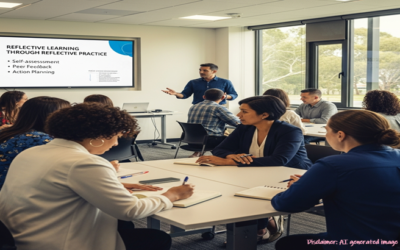

The phrase “classroom management” refers to strategies used by educators to both avoid misbehavior and address it when it does occur. Put otherwise, it refers to the methods educators use to keep things under control in the classroom. One of the things that new instructors dread the most about teaching is managing the classroom. Ineffective classroom management can have the unintended consequence of making learning less effective for the pupils. It may lead to stress and dissatisfaction for the instructor and, in the end, drive people to quit teaching.
To obtain successful educational outcomes, instructors must be able to identify classrooms and control their pupils’ behavior. While competent behavior management creates the conditions for successful instruction, it does not ensure it. Classroom behavior issues are inversely caused by extremely successful training, but they are not eliminated.
It takes careful thinking and preparation to set up a classroom in a way that encourages good student behavior. The classroom environment is organized by highly competent instructors in a way that minimizes the possibility of improper student behavior, fosters positive student relationships, and positions students for success.
The following elements must be taken into consideration for effective classroom organization.
- Creating a physical arrangement that eases traffic flow, minimizes distractions, and provides teachers with good access to students to respond to their questions and better control behavior.
- Making efficient use of classroom time, including transitions between various classroom activities.
- Ensuring that the nature and quality of student interactions is positive.
- Communicating appropriate behaviors for particular classroom activities.
For instance, during cooperative learning exercises, students would be required to engage with one another; nevertheless, when individuals work at their seats, this may not be the case.
Education experts state that the goal of school and classroom management is to develop and foster self-control in students by means of fostering positive behavior and accomplishment on the part of the students. Thus, the idea of classroom and school management is closely related to academic accomplishment, teacher effectiveness, and behavior on the part of both teachers and students.
Read: Importance of communication skills for effective teaching
Three main areas are the emphasis of classroom management: behavior management, covenant management, and contents management. Effective teaching approaches include a set of observable aspects that define and elaborate on each of these topics. Studies have demonstrated that the efficacy of teaching and learning is significantly impacted by a high prevalence of disciplinary issues in the classroom. It has been shown that educators who deal with these kinds of problems often neglect to organize and provide relevant learning activities. Additionally, they frequently fail to include variation in their lesson plans and infrequently encourage pupils to debate or assess the content they are learning. Additionally, there is infrequent monitoring of students’ understanding or seat work. In contrast, strong and consistent management and organizational skills have been identified as leading to fewer classroom discipline problems.
Behavior management strategies
The most effective teachers
- manage behavior in their multi-ethnic, multi-cultural classrooms.
- develop and use classroom rules and routines?
- use classroom consequences that work?
- design positive behavioral supports for challenging behaviors?
- avoid career- and health-threatening frustration and burnout?
Maintenance of safe and supportive classrooms
In universities, it is uncommon to teach students crucial skills like creating and maintaining safe, supportive classroom environments that enable high-quality student accomplishment.
It follows that those abilities need to be developed and refined “on the job.” Since every school year comes with it a new set of kids, instructors need to become lifelong learners. Every classroom and school has its own special problems.
The foundation of this learning lies in just a few research-supported principles and actions. Everything starts with TEACH:
T – Tailor for diversity. Make it a point to know as much as possible about your students, including their diverse cultural, ethnic, behavioral, and learning characteristics, along with stressors they may experience outside of school.
E – Encourage positive behavior. Aim for a 4:1 ratio of positive comments to negative corrections for all the students.
A – Arrange the environment for success. Teach your behavioral expectations directly and immediately through collaboratively-established classroom rules and well-designed classroom routines.
C – Consult your peers. Seek collaboration with experienced teachers and specialists before difficult problems start to become entrenched. H – Hug yourself. Prevent stress and burnout by focusing each day on what you are accomplishing and not just on what is frustrating.
The following part elaborates, explains, and expands on these five key ideas to assist you in putting the TEACH guideline into practice.
In some well-taught classes with good speed, diversity, and challenge, behavior issues were rare; in others, order was upheld by allocating an excessive amount of time to address behavior issues and suppress minor but persistent disruptions, sometimes at the expense of students’ learning. Boredom sets in and students’ behavior degrades in environments when instruction is subpar and expectations are low.
In order to improve classroom management through more efficient teaching and learning, the following advice is provided:
1). Give students an overview of what they are learning. Don’t teach isolated segments of content without showing how they link into the whole.
2). Help students to understand the relevance of what they are learning. Not only in terms of practical usefullness, but also how it relates to other areas of knowledge or the overall subject matter.
3). Use a variety of approaches for both input and student presentation of work. Research shows that students have different learning styles so a variety in both input and output allows more students to work in their preferred style. It is not only to encourage the participation of students less able in reading and writing but also allows more able students to develop creativity.
4). Make tasks clear. Investing time at the outset by giving a full explanation to the whole class can save time later having to clarify the task for individual students. This may also involve teaching the language of the subject so that instructions are understood (keywords and definitions can be kept on display in a subject classroom).
5). Use tutorial groups to have regular personal contact with students in a manageable way. Establish ground rules for this so that the rest of the class remains on task whilst you are talking to a particular group.
6)Use a variety of resources – video, audio, pictures, books etc. and establish a system (color coding, clear labeling) which enables students to access and replace resources easily so that the teacher does not become the resource manager.
7). Design activities to develop understanding rather than closed questions to produce the right answers . Activities that require the student to process information rather than just transfer it from one place to another will improve motivation by challenging the student as well as deepen understanding.
8). When producing your own resources make them into learning guides which gives an overview of the learning objectives of the task, provide prompts as to which resources could be used, and how the presentation of information could be made etc. to avoid students being over-reliant on the teacher to start and get on with their work.
Read our blog: PakSci Mission