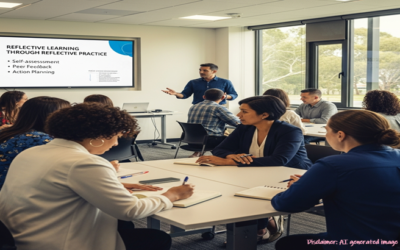

The teacher can assess a student’s knowledge and learning by asking questions about a particular topic using guided discussion. This allows the instructor to discover what the student knows and does not know. With this approach, the instructor “draws out” the material and welcomes inquiries from the class. In the guided discussion technique, there are many kinds of questions:
1. Overhead/How/Why: This category of questions is directed to the whole group.
2. Rhetorical: Rhetorical questions prompt group thought and thinking.
3. Direct: Direct questions are asked of a particular student.
4. Reverse: In response to a question, another question is asked.
5. Relay: Relay the question to the group if asked by a student.
Read: The major elements of social structure in the development of a society
A question that is appropriate for the topic, has an aim, logically arranges the major and supporting arguments, and aids students in their preparation is considered successful. Proper planning and execution of a logical sequence are key components of an effective guided conversation. The format for the guided conversation is as follows:
Objectives:
Before starting the guided discussion, the instructor should have clear objectives.
Introduction:
The instructor should introduce the discussion simply by posing a question or telling a story to help get the discussion off the ground.
Discussion:
The instructor should try to keep students focused on the topic. It demands attention from the instructor and continual evaluation of students’ knowledge.
Summary:
Before moving to the next section, the instructor should summarize the previous section.
Conclusion:
Review and recap are indispensable in guided discussion to have an idea of what was covered. This will help the student grasp the “larger picture.” The instructor should clarify any questions.
It suggests that the guided discussion approach has a defined goal and is intended to pique students’ curiosity by connecting newly learned material to previously acquired knowledge.
Read our blog: PakSci Mission